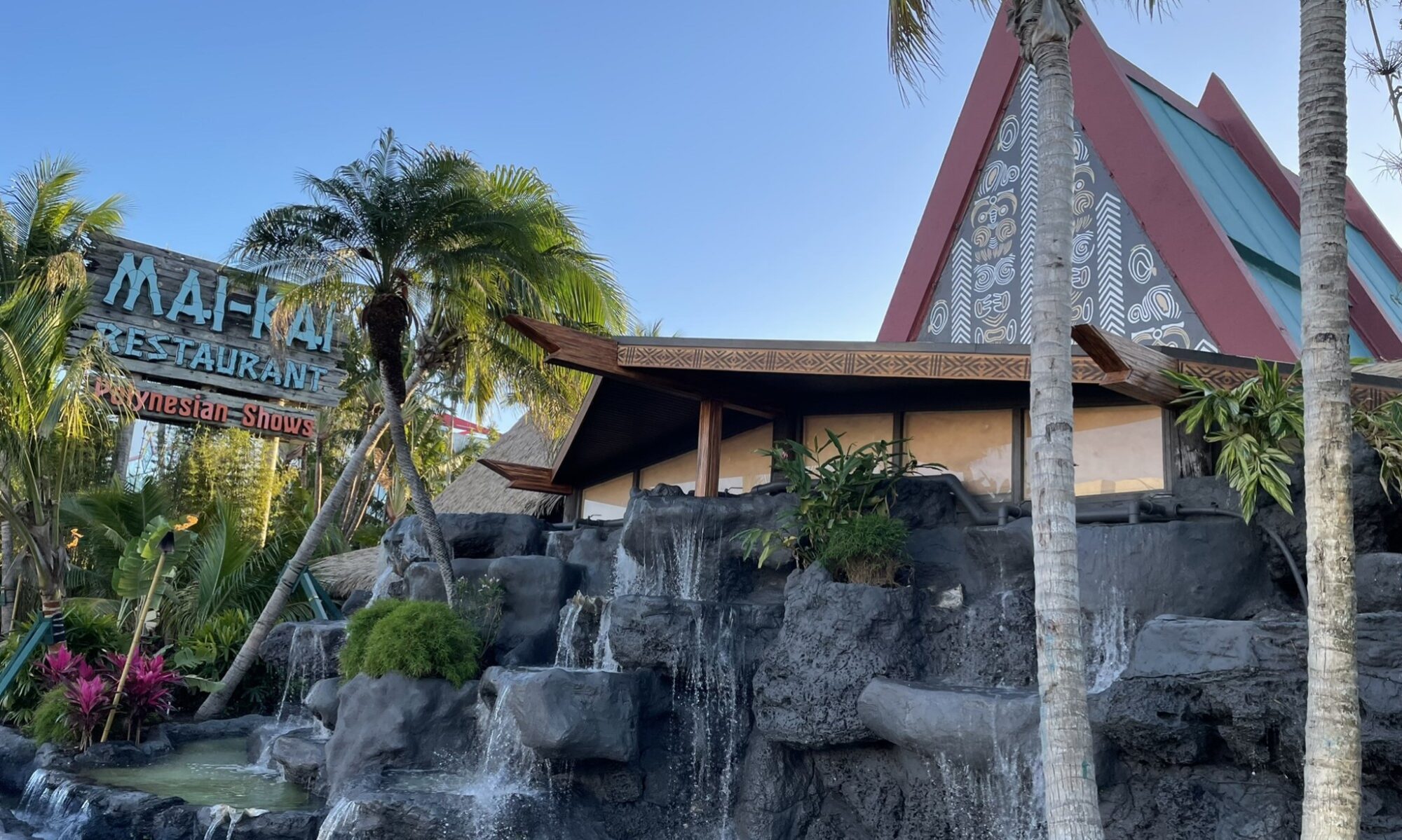
While the COVID pandemic is by no means a thing of the past, the Tiki events circuit was back to almost full capacity in 2022. This also includes many rum and surf music events around the world that we also documented on The Tiki Times, The Atomic Grog’s ongoing event guide. It was great to see many old standby events back in full force, while new happenings also made their mark. Check below for artwork and links to official sites, plus images and videos from social media. THE TIKI TIMES 2023: Latest upcoming live and virtual events Social media:Facebook | Twitter | Instagram | Pinterest
We’re sorely missing The Mai-Kai’s beloved Hulaween party for the second year in a row, but luckily fans of potent Tiki cocktails will be able to drown their sorrows with a distinctive drink that hasn’t been served since the historic restaurant closed for refurbishments in October 2020.
The Zombie, which traces its roots all the way back to tropical drink pioneer Don the Beachcomber, is available for a limited time as part of The Mai-Kai’s periodic takeout cocktail program. You can order the deadly classic by the quart and gallon, the perfect addition to weekend Halloween gatherings.
Pickup dates are Friday, Oct. 28 (4-6 p.m.) and Saturday, Oct. 29 (10 a.m.-noon). Call public relations director Pia Dahlquist 954-646-8975 to place your order.
Consume with caution, however, since this is one of the strongest cocktails ever created. Donn Beach’s original 1934 recipe included 4 ounces of three different rums, including overproof, and he famously limited guests to two drinks per visit.
The Mai-Kai’s version, created by former Beachcomber bartender Mariano Licudine for the restaurant’s 1956 opening, is more balanced and accessible yet still packs a potent punch (and a healthy dose of 151 rum). It replaced the equally strong Jet Pilot on the “Gallons To Go” menu for Halloween and is priced accordingly (gallon $156, quart $44).
Also on the menu are three other popular standbys: Barrel O’ Rum (gallon $95, quart $30), Black Magic (gallon $95, quart $30), and Mai Tai (gallon $142, quart $40). Click on the links for our comprehensive reviews and recipes for all the cocktails.
All are among the most acclaimed libations in our Mai-Kai cocktail guide, but the top-rated Zombie is a rare treat. It’s complex and a little difficult to execute in large batches, so it hasn’t been offered as part of the popular to-go initiative, which launched early in the pandemic and has continued during the closing.
It also requires some care for guests to pull off the perfect Zombie at home. Luckily, manager Kern Mattei and former Molokai bar server Claudia Marmolejo showed us how to mix up the perfect Halloween treat in a recent Facebook video:
Saves these dates now and make plans for a full year of major events across the world of Tiki culture. We’ll also keep you posted on many worldwide gatherings for fans of rum, lowbrow and mid-century modern art, surf and rockabilly music, plus some Disney events and anything of general interest to the Tiki community.
In the entertainment and hospitality industry, your biggest fans can also be your toughest critics. So when the new owner of South Florida’s beloved Mai-Kai sat down with more than 100 Tiki enthusiasts during The Hukilau on June 11 for an open discussion of his plans to renovate the 65-year-old landmark, their reaction was crucial.
Bill Fuller, leader of the new ownership team that purchased The Mai-Kai in late 2021, speaks to attendees of The Hukilau 2022 at the Beachcomber Resort in Pompano Beach on June 11. (Photo by Hurricane Hayward)
Judging by the many rousing ovations throughout the 50-minute presentation, veteran real estate developer and historic preservationist Bill Fuller passed the test with flying colors. The only murmurs of dissent came when the organizer of The Hukilau, Richard Oneslager, jokingly asked if it was true Fuller planned to replace the restaurant’s signature Chinese ovens with microwaves, and if The Molokai bar was being re-themed to Miami Vice.
Looming thunderstorms put a kibosh on the multimedia presentation planned for the open-air beachside gathering at the Beachcomber Resort in Pompano Beach. But Fuller’s words were more than enough to win over the crowd who came from around the world to the 19th Tiki weekender that traditionally culminates with a climactic evening at The Mai-Kai.
Fuller elaborated on those plans during his talk at The Hukilau, divulging some new details. He was joined by two members of The Mai-Kai family, Kulani Thornton Gelardi and Kern Mattei, who also revealed some interesting new projects in the works.
After a spirited intro by event emcee King Kululele, Oneslager sat down with Fuller and led a question-and-answer session under the large thatched hut between the pool and beach at the quaint boutique hotel. The burning questions on everyone’s mind, Oneslager said to Fuller, were: “What’s going to stay? What’s going to change? And are you going to screw things up?”
Mireille Thornton on stage at The Mai-Kai in the early 1970s. (Mai-Kai photo)
Fuller said he was “lucky to be at the right place at the right time to be able to join forces with the family” in September 2021. The reason The Mai-Kai is being preserved is mainly due to the will of the Thornton family, he said. Gelardi’s mother, Mireille Thornton, inherited the ownership mantle from her late husband, Robert Thornton, in 1989.
The 85-year-old family matriarch will continue to choreograph and produce the restaurant’s authentic Polynesian show, which she joined as a dancer from Tahiti in the early 1960s. “She has her own nuances, which is what makes special experiences like this tick,” Fuller said. “You can’t just replicate it, you need to have that body of knowledge, that creativity and heritage. That’s what’s so rich within the walls of The Mai-Kai.”
The first question for Fuller from the audience echoed a common refrain on social media: Exactly when can we expect to be back within those walls?
The Hukilau was back on the beach for 2022, hosting its many retro-themed Tiki festivities at a scenic hotel just north of Fort Lauderdale. The 20th Polynesian Pop weekender (the second longest-running in the world), featured four days of live music, educational seminars, cocktails and rum tastings, plus lots more. Click below for extensive photo/video recaps on social media. Thursday | Friday | Saturday | Sunday
The Beachcomber, a family-owned property in Pompano Beach, features lots of outdoor space just steps from the Atlantic Ocean. The Mai-Kai, the longtime host restaurant that remains closed for refurbishment, participated by serving cocktails and offering villagers drinks to go. The new ownership team also presented an exclusive symposium on the exciting new plans for the historic property.
The Hukilau 2022 – June 9-12 at the Beachcomber Resort & Club in Pompano Beach. Featuring live music (The Surfrajettes, The Intoxicators, The Manakooras, King Kukulele, Skinny Jimmy Stingray), symposiums (Ian Burrell, David Wondrich, The Mai-Kai, Rocket Betty, Spike Marble, Headhunter Ray, Jeff Ballard), 15 guest bars, rum tastings, luau on the beach, pool parties, Tiki Treasures Bazaar, plus more. Official website | Instagram | Facebook page and group
The first weekend in June brought a blast of stormy weather to South Florida, but the second weekend promises an entirely different – and much more festive – tropical disturbance. The Hukilau will inundate the Fort Lauderdale area beachfront with four days of rum-soaked activities, rockin’ surf bands and special guests from across the worldwide Tiki revival.
The 20th Polynesian Pop celebration is scheduled for Wednesday through Sunday, June 9-12, at the Beachcomber Resort & Club in Pompano Beach. Highlights include Friday’s luau on the beach and Saturday’s giant Tiki marketplace. Pool parties will feature music by top underground bands (The Surfrajettes, The Intoxicators, The Manakooras) and cocktails served up by 16 Tiki bar teams from near and far.
By Thursday, the hurricane season’s first potential tropical system will be long gone. Weekend forecasts call for rain chances around 30 to 40 percent with high temperatures near 90, a typical early summer weekend in balmy South Florida.
A bird’s eye view of the Beachcomber resort’s pool and beach area. (Official photo)
Most of The Hukilau’s events and social gatherings take place poolside and under shaded thatched huts at the beachside resort. Organizers are prepared in case of bad weather with back-up plans to move some events indoors, but coverings in the outdoor areas can shield guests during typical rainy days.
The event is not yet sold out, so check the tickets page at TheHukilau.com for pass availability. The best bet for locals and late arrivals is the one-day Palm Pass ($129), which includes Saturday’s Rum Island Pool Party and Tiki Treasures Bazaar, plus the evening bungalow parties. Online sales will continue to be available, but walk-ups will also be accommodated on Saturday.
Other options include the multi-day Aloha (Friday-Saturday) and South Seas (Thursday-Saturday) passes. Many symposiums and special events are included in the price of the top-tier passes. All guests receive complimentary craft cocktails from some of the world’s best bartenders as well as tastings of sponsor rums.
Austin’s Tiki Tatsu-Ya. (Photo by Jupiter Jones, April 2022)
Two of the guest bars – Austin’s Tiki Tatsu-Ya (Best New U.S. Cocktail Bar) and Chicago’s Three Dots and a Dash (World’s Best Spirits Selection for The Bamboo Room speakeasy) – were just named top 10 finalists for Spirited Awards at this year’s Tales of the Cocktail in New Orleans. Several others are past nominees. Previous story: See our past coverage of the full bar lineup
If you’re still looking for a room, it’s worth checking the Beachcomber first. The resort is close to selling out, but a few rooms are often held back for last-minute release. There’s also the possibility of cancellations at any time. Call (954) 941-7830 for reservations, and be aware that you’ll need to show proof of an event pass at check-in.
Don’t fret if all of the 150-odd rooms at the Beachcomber are taken, however. The beachfront along scenic State Road A1A is loaded with options, including many small boutique hotels and motels. The official alternate hotel is the Ocean Beach Resort & Suites, a half-mile to the north. Call (954) 942-2030 and mention The Hukilau for a special rate.
Guests at The Hukilau 2021 enjoy the poolside cocktails at the Beachcomber Resort. (Photo by Hurricane Hayward)
The move last year to the Beachcomber was party due to necessity because of the pandemic. It provided much outdoor space, along with a smaller room count as well as fewer expenses. Past host hotels have included massive properties such as the Pier Sixty-Six Hotel & Marina, which closed for a multi-year refurbishment immediately after The Hukilau 2019.
But the change did not come without some sense of serendipity. The Hukilau, after all, is named for an oceanside gathering of family and friends for a giant fishing festival.
“This is what The Hukilau is meant to be,” organizer Richard Oneslager said in a recent interview. “We’re on the ocean, doing business with a family-run property.”
The entire hotel is reserved for The Hukilau, which both limits its size and makes for a more immersive event. It’s a “complete escape to a Tiki paradise,” Oneslager said, referring to the experience as “our own little world.” Because there are no outsiders, “everyone around you is part of the show,” he said. Very few events can offer that complete package.
The Beachcomber Resort bungalows and lawn, which are used during The Hukilau for parties and special activities. (Official photo)
Oneslager said there are no plans to grow more than a modest 5 or 10 percent. He said he likes the current configuration, which gives villagers the opportunity to meet new friends, but still have an intimate experience. Previous story: More on the hotel and event history
“Having the whole property to ourselves is a big thing,” he said. While he won’t give an exact number, Oneslager said the total number of passes sold this year will be less than 750. That aligns The Hukilau more with the many medium-sized multi-day events rather than the giant Tiki Oasis in San Diego. The Tiki Times:The Atomic Grog’s exclusive events guide
Tropical cocktails are abundant at The Hukilau. (Official photo)
In addition to all the major highlights on the schedule and noted below, Oneslager continues to add fun, last-minute features. He mentioned the return of Tiki miniature golf as well as a series of outdoor “Ohana-Rama” games that you can play at your leisure or join a competition. There will also be a Tiki bingo event Saturday to benefit the Florida Restaurant and Lodging Association’s educational foundation.
We remain thankful for every bit of good news. While a few of the stories below are frustrating (No. 4) or bittersweet (No. 1), they’re far out-numbered by the explosions of creativity and collective talent that drove most of the year’s activity. For that, we toast the entire Tiki community with a new cocktail and The Atomic Grog’s picks for the 10 most newsworthy stories of 2021. Bonus recipe below:The Tiki Lover
1. ALOHA AND FAREWELL, OCEANIC ARTS
As sure as the sun rose in the east and set in the west, there was one enduring creative force over the past six decades of Polynesian Pop style. In November 2021, there was a total eclipse and extended period of mourning when it was announced that Oceanic Arts would be closing its doors as its 80-something-year-old founders embark on a well-deserved retirement. Established in 1956 in Southern California by Robert Van Oosting and LeRoy Schmaltz, the company was always the go-to provider of original and imported pieces of South Seas art and decor for everyone from home enthusiasts to theme park giants including Disney (the doors to Trader Sam’s in Disneyland are Schmaltz’ handiwork). Art and woodwork originating from Oceanic Arts has been featured in nearly every legendary Polynesian palace, from Don the Beachcomber to Trader Vic’s to The Mai-Kai. The company put together movie set pieces and provided the distinctive style of many of the mid 20th century’s Tiki-themed hotels and motels, bowling alleys, and countless other establishments. Buoyed by the Tiki revival, the small shop in Whittier became a mecca for Tikiphiles from around the world and inspired a new generation of carvers and artists in the 21st century.
While the closing seemed to have come out of the blue, Van Oosting and Schmaltz had been planning their retirement for some time. They joined forces with longtime friend Jordan Reichek, owner of Peekaboo Gallery in nearby Montrose, for an epic career-spanning retrospective coming in 2022. In the spring, look for what’s being called an “experiential Tiki exhibition” featuring art and artifacts from Oceanic Arts paired with special events that include live music and performances, panel discussions, an “epic Tiki bar,” and more. The events will culminate with the “ultimate Tiki auction” art show and sale. In the meantime, the gallery is taking pre-orders for a mammoth Oceanic Arts history book compiled and written by Reichek, who worked closely with Van Oosting and Schmaltz. Oceanic Arts: The Godfathers of Tiki is a 500-page opus that documents the rich history of Oceanic Arts via thousands of photos, original artwork and historical documents from the archives. After 65 years, Oceanic Arts leaves an indelible mark on pop culture that is likely to last for many more decades to come.
The entire Tiki community heaved a sigh of relief in September when the announcement came that The Mai-Kai – the historic, 65-year-old restaurant in Fort Lauderdale that has been closed due to storm damage since October 2020 – was saved from extinction by a new ownership team that will pump millions of dollars into a restoration and refurbishment. The year started with much concern after press reports emerged about the roof damage that destroyed the kitchen. A “Save The Mai-Kai” petition gathered more than 10,000 signatures in less than a month as devoted fans united online to share their support and concerns. The skeleton crew of owners and staff continued to offer regular takeout cocktails and began a series of events in the expansive parking lot. The highlights were The Mai-Kai’s first-ever Tiki Marketplace in April featuring vendors, entertainers, cocktails, rum tasting and more. A follow-up event in July kept the momentum going while behind-the-scene negotiations were likely starting to ramp up.
The big announcement came in September, just after hundreds of Tikiphiles from around the country finally returned to Fort Lauderdale for the 19th edition of The Hukilau. Then, a week later, the long-awaited news dropped. The founding Thornton family released details on social media on Sept. 28, outlining the joint venture with a South Florida-based real estate investment and development company known for working with legacy businesses. Its sister hospitality company already operates several vintage venues in Miami’s Little Havana. “We’re looking forward to working closely with the Barlington Group and Mad Room Hospitality to sustain The Mai-Kai the world has come to know and love,” the announcement said. “We’re excited to bring back The Mai-Kai better than ever before — and for you to be a special part of it!” Check out links to our in-depth report above and latest updates below.
The crushing blow of the pandemic was not easy to overcome for event organizers, but we slowly came out of our homes in 2021 and began to gather again in safe and physically-distanced environments. Longtime online meet-ups – most notably Tiki Trail Live and Spike’s Breezeway Cocktail Hour – continued to thrive. But many longed for live human interaction, and a handful of key (mainly outdoor) events delivered that experience in the year’s early months. Then, when vaccines became widely available, we saw the return of several major Tiki events starting with Arizona Tiki Oasis on April 22-25. Carefully organized by Baby Doe and Otto von Stroheim, the event paved the way for an active summer, including the couple’s flagship Tiki Oasis on July 28 -Aug. 1 in San Diego. Momentum slowed in the late summer and fall as the first of several coronavirus variants emerged, but Tikiphiles still flocked to scaled-down events including Ohana: Luau At The Lake in upstate New York, The Hukilau and Tiki Fever in Florida, and Tiki Caliente in Palm Springs, Calif. Rum aficionados around the world also were able to get back into the swing of tasting events, from the Jamaica Rum Festival in March to the Miami Rum Renaissance Festival in November. See the full list of major 2021 events below.
NOTE: The news below is from 2022. Click on the link above for the latest stories from 2023.
2022 RECAP
There was much rejoicing after the announcement in September 2021 that after being closed for nearly a year, The Mai-Kai in Fort Lauderdale would reopen under a new ownership team that will pump millions of dollars into an extensive refurbishment and renovations. A devastating roof collapse in the kitchen in October 2020 had shut down indoor service indefinitely.
Now, as we close out 2022 and work progresses, fans and supporters are eager to learn details. The Atomic Grog will keep you updated with the latest info on the refurbishment of the historic Polynesian restaurant. Check out all of the updates over the past year below, and keep an eye out for lots more as work ramps up in 2023.
DEC. 30 – The Mai-Kai turns 66 as work progresses on multiple renovation projects
The Mai-Kai’s 66th birthday passed quietly on Dec. 28, but there are many reasons to be hopeful that the 67th anniversary in 2023 will be the first since 2019 when we’ll once again be able to gather inside the historic Fort Lauderdale restaurant to appreciate its grandeur and beauty.
The multimillion-dollar renovation that kicked off earlier this year is turning out to be a slow and meticulous process. But rest assured that no expenses are being spared, nor any corners being cut, as the owners and management aim for a possible spring reopening.
Luckily, locals were still able to toast the anniversary – and celebrate the year-end holidays in style – with takeout cocktails prepared by manager Kern Mattei and organized by public relations director Pia Dahlquist. Both stayed busy filling orders for Christmas and New Year’s Eve, the latest opportunity to pick up quarts and gallons to go. Look for new dates to be announced soon for 2023.
Following is a detailed recap from our final peek inside the hallowed halls as work was winding down before the holiday break …
Typhoon Tommy: The one-man master restoration machine
I arrived at the main entrance of The Mai-Kai on Wednesday, Dec. 21, to find creative director “Typhoon Tommy” Allsmiller up on a ladder just inside the main foyer, hard at work restoring the woodwork high above my head. The young craftsman – whose past work can be seen at both Universal and Disney parks, along with several notable Tiki establishments – began working on the interior restoration in July.
The refurbishment of The Molokai lounge at The Mai-Kai are nearing completion, thanks to creative director “Typhoon Tommy” Allsmiller. Woodwork was rejuvenated, and lamps were repaired or rebuilt. (Photo by Hurricane Hayward, December 2022)
Allsmiller has spent the past six months bringing The Molokai bar back to its vintage glory. He gave us a tour while also discussing one of his most painstaking projects: Refurbishing many of the hundreds of lamps hanging throughout the restaurant. Many of these date back to the early years of The Mai-Kai and were created by the venerable Oceanic Arts. [See past coverage below]
It was the designer’s last day of the year working inside the building, but as usual he planned to take his work home with him to central Florida to continue to rebuild lamps in workshop over the holiday break. He said that when he returns in January, he plans to have a partner helping him kickstart work on his long list of projects.
The Molokai is nearly done, Allsmiller said, pointing out all of the woodwork that has been completed. Painters will arrive next to do the finishing touches on the nautical-themed bar that dates back to The Mai-Kai’s early 1970s expansion. Much of the stylized decor – such as the ship’s rigging and props on display – were featured in the classic Marlin Brando film Mutiny on the Bounty (1962) and purchased from the MGM prop department.
A piece of wood from the pre-1970 Molokai bar was strategically placed by Typhoon Tommy during renovations. He uncovered several vintage wood panels that had been sealed beneath the facade of the reimagined bar and entrance area for more than 50 years. We got a peek at them in the back office (at right). (Photos by Hurricane Hayward, December 2022)
Allsmiller showed off an Easter egg he left hidden high in the rafters of The Molokai: Part of a decorative wood panel that pre-dates the 1970 redressing of the bar. These painted panels were originally used outside the front door and throughout The Molokai. [See our original post below]
Later, in the back office, we spotted several large panels that Allsmiller was able to remove nearly intact after being covered for more than 50 years. He said he found the painted wood pieces, which can be seen in vintage Mai-Kai photos, when he redid the beam above the front door.
“They’re in great shape, so I thought I’d save them, not cover them up,” Allsmiller said. Could they be destined for use elsewhere in the refurbishment?
Just inside The Molokai bar, a table holds an array of lamps being renovated by creative director “Typhoon Tommy” Allsmiller. (Photo by Hurricane Hayward, December 2022)
A table set up near the entrance to The Molokai was overflowing with lamps in various stages of restoration. The restaurant is filled to the brim with these incredibly detailed works of functional art, but Allsmiller said he’s making progress.
He pointed out one of the lamps that required a full rebuild of its insides. He said he plans to put a new top on it before returning it to its spot hanging from the ceiling.
A great example of the length Allsmiller will go to in restoring these lamps was a weathered, hourglass-shaped fixture that he totally rebuilt. He’s still working on the trim work on the vintage lamp, which he found with a badly ripped panel.
Outside the entrance to The Mai-Kai, Typhoon Tommy shows off a lamp that he meticulously restored. He replaced damaged panels and painted them by hand to look original. (Photo by Hurricane Hayward, December 2022)
To ensure that the repair looks exactly like the original, he used old fiberglass paper that was removed elsewhere. “It fits the timeline,” he said. He then hand-painted it to mimic the original. The entire internal structure is all brand new, but his work using a pinstriping brush on the restored panels will be undetectable when its returned to its perch.
Until cocktail author and historian Jeff “Beachbum” Berry unearthed the mystery behind Don the Beachcomber’s classic Zombie cocktail, the true recipe lay buried for more than 70 years. Berry’s discovery and publication of his findings in the groundbreaking Sippin’ Safari (2007) spurred a revival and greater appreciation of the deadly drink that continues to this day.
An ad for ‘Beachbum Berry’s Sippin’ Safari’ around the time of its original release.
Simultaneously and coincidentally, the world of cinema also went zombie crazy, ushering in a renaissance of the modern horror archetype. Of the 30 films on a recently published list of “The best zombie movies of all time,” half were released in the 21st century.
With the precision of a pathologist, Berry dissected and definitively revealed the template that the bootlegger turned Tiki cocktail pioneer used to create what was arguably the most popular drink of the post-Prohibition era. The original 1934 recipe is a groundbreaking masterpiece, combining multiple rums and spices with sweet and sour juices and syrups, bitters, and even a touch of anise. Stay tuned for the upcoming book (Searching for Don the Beachcomber) and film (The Donn of Tiki) for the full story of his life and times.
Donn Beach (aka Don the Beachcomber) shows off what appears to be a Zombie along with some of his other groundbreaking creations. (From TheDonnOfTiki.com)
In the ensuring years, that origin story has been widely ignored by pop culture. The movie genre traces its modern roots to director George Romero and his 1968 cult classic Night of the Living Dead. Nearly every movie or TV series since has loosely followed Romero’s template of reanimated corpses mindlessly running amok for no apparent reason, with political and social statements thrown in for good measure.
Back in the 1930s, Ernest Raymond Beaumont Gantt (who later legally changed his name to Donn Beach) simply borrowed the name and made no attempt at connecting it to its island of origin. But what if we go back to the roots of the true zombie legend and use it as inspiration for not one, but two new Zombie cocktails?
BACKGROUND: Haitian zombie folklore rooted in slavery, French colonialism
The true story behind zombie folklore is scarier and more tragic than a movie.
“Zombies” by Haitian artist Wilson Bigaud, 1953 (oil on board mounted on wood panel). Part of the Haitian Collection at the Figge Art Museum in Davenport, Iowa.
Like its sister islands, what is now Haiti was invaded and colonized by a European power. France established Saint-Domingue in 1664, growing it into the richest sugar colony in the Caribbean on the backs of African slaves.
The brutal practice came to a violent end in 1791, when slaves staged a mass revolt and rose up against their oppressors. By 1794, the French government abolished slavery throughout its empire, more than 70 years before the 13th Amendment ended the practice in the United States.
The revolt sparked the Haitian Revolution, which ended in 1804 with the island’s independence and heroic ex-slave Toussaint Louverture installed as Haiti’s first governor general. It was a defining moment in the history of the Atlantic World, distinctive as the only slave uprising that led to the founding of a state that was both free from slavery and ruled by non-whites and former captives.
The legend of the zombie, or “zonbi” as it was known in Haitian Creole culture, could be considered a metaphor for the horrors of slavery.
A zonbi at twilight in sugar cane field in Haiti. (Wikimedia Commons)
The word itself and the concept of zombie-like creatures can be traced back to African origins. Some research has also found a connection to the island’s indigenous TaÃno people, known for their shamanist practices. The African slaves brought with them traditions and from their homeland, including the “Vodou” religion.
Haitian Vodou developed between the 16th and 19th centuries, merging traditional religions of west and central Africa with Roman Catholicism. In Haitian culture, a zonbi is a dead body brought back to life by a Vodou sorcerer known as a “bokor.” According to legend, the zonbi is under the total control of the bokor as a personal slave and lacks any will of its own. It’s part of a complex, spiritual belief (“soul dualism”) that a person has two or more kinds of souls.
One soul (“body soul”) is associated with body functions while the other (“free soul” or “wandering soul”) can leave the body. In the belief system of the enslaved Africans brought to Haiti, the afterlife included a return to their homeland, where both souls were reunited. However, if they had offended their voodoo deity, they would remain a zonbi and be a slave for eternity.
The fear of “zombification” was used by slave drivers to discourage slaves from committing suicide. These men who directed the daily work were often slaves themselves and sometimes also practicing voodoo priests, according to scholars. After the revolution, the zonbi became part of Haitian folklore, a stirring reminder of the past in the hope that it never happens again.
The earliest references to zombies in the United States, cited throughout the 1800s, were also closely associated with slavery and connected to African traditions. But the phenomenon went mainstream during the United States’ military occupation of Haiti (1915–1934).
Travel writer William Seabrook’s book, The Magic Island (1929), revealed “voodoo cults” in Haiti and likely inspired the 1932 film White Zombie. Though it takes place in Haiti, the film twists the legend to appeal to its American audience. I Walked With A Zombie, a 1943 horror movie set in a fictional Caribbean island, further strays from the original legend. By 1968 and Romero’s Night of the Living Dead, the horror film was cloaked in social commentary and civil rights, leaving Haiti’s zonbi myth to the history books.
The Haitian zombie made a brief comeback in 1985, when anthropologist Wade Davis published his controversial findings in the book The Serpent and the Rainbow, which recounted his experiences investigating Vodou cults in Haiti. It was criticized for scientific inaccuracies in regards to its theories about psychoactive drugs, but it was a commercial success and inspired the 1988 horror film of the same name (starring Bill Pullman).
But just when you thought the legend was dead and buried, a more socially aware mindset has sparked new interest.
After 11 months of uncertainty, loyal patrons of The Mai-Kai finally have a reason to raise a Barrel O’ Rum and celebrate. The founding owners have announced a joint ownership agreement that will not only infuse at least $5 million into the refurbishment of the 64-year-old Fort Lauderdale landmark, but also allow it to reopen in all its historic glory.
It’s been a rough year since a vicious October 2020 storm collapsed part of the roof and debilitated the kitchen and back-of-house operations. But the family that has operated the iconic Polynesian restaurant since 1956 has charted a new course with the help of a South Florida real estate investment and development company that specializes in restoring historic properties.
The bombshell was dropped Sept. 28 in an email and social media announcement titled “The Mai-Kai update you have all been waiting for.” The owners made public their joint venture with Miami’s Barlington Group and Mad Room Hospitality. No strangers to reviving beloved cultural institutions, the companies have been instrumental in revitalizing Ball and Chain and Taquerias El Mexicano in Little Havana’s famed Calle Ocho.
“We really understand what it’s like to be stewards of an older brand, where authenticity and heritage is very, very important,” Bill Fuller, a founder of both companies, told TV news station CBS 4 in Miami. “It’s outstanding to see the outpouring of folks and feedback from all over the world about how meaningful and how important The Mai-Kai has been in their life.”
The Mai-Kai began looking for partners in late 2020, when the scope of the damage and extent of the needed repairs became clear. After “considering numerous interested parties,” the announcement said, the search ended with the Miami group “when we met their team and recognized the passion they share for honoring and preserving the legacy of The Mai-Kai.”
That’s sure to please the restaurant’s passionate followers, who continue to show their support by ordering takeout cocktails and attending special outdoor events at 3599 N. Federal Highway in the suburb of Oakland Park. Until Sept. 28, they had been sharing their fears and frustrations online almost daily. A “Save The Mai-Kai” petition has nearly 12,000 signatures.
Guests of The Hukilau gathered at The Mai-Kai on Sept. 18 for the “Save Paradise Party.” (Photos by Hurricane Hayward)
The Mai-Kai thanks ‘devoted fans and guests,’ promises restoration to ‘former splendor and beyond’
While the news on the ownership change was the top headline, the founding Thornton family made sure to show its appreciation to its customers first and foremost: “Most importantly, we want to thank you, our devoted fans and guests, for your continued support even while our doors have been closed,” the acknowledgement said. “You are a part of The Mai-Kai story, and we’re humbled by the outpouring of love and concern we’ve received. Rest assured, we are doing all we can to restore this beloved local institution — our family’s three-generation legacy — to its former splendor and beyond.”
The news resoundingly dashed all fears of a corporate takeover – or worse, the fate of a bulldozer. To the contrary, it appears that The Mai-Kai will return fully intact. “We’re looking forward to working closely with the Barlington Group and Mad Room Hospitality to sustain The Mai-Kai the world has come to know and love,” the announcement said. “We’re excited to bring back The Mai-Kai better than ever before — and for you to be a special part of it!”
We won’t receive a reopening date until the restoration and repairs are nearing completion, but a member of the Thornton ownership team said during The Hukilau a week before the announcement that we could be back inside the historic doors in eight to 12 months. Kulani Thornton Gelardi also foreshadowed the big news by saying that the guest areas of the restaurant will remain “85 to 90 percent the way it is now.” Gelardi, daughter of family matriarch Mireille Thornton, said they “want to make sure the building can exist for another 64 years.”
Kulani Thornton Gelardi serves appreciative guests at a special event at The Mai-Kai on Sept. 18 during The Hukilau. She later assured the crowd that the restaurant will reopen soon. (Photo by Hurricane Hayward)
Speaking to the crowd at the “Save Paradise Party” outside the entrance to The Mai-Kai on Sept. 18, Gelardi promised that “we will reopen,” adding that guests won’t notice much changed “when you walk in that door.” She also spoke of her family, and how much it means to pass along the business to her children and grandchildren.
The news on the ownership change was supposed to take place during the annual Tiki weekender that draws devotees to Fort Lauderdale and The Mai-Kai from around the world. But the ink wasn’t dry on the million-dollar deal until the following week, so the official announcement was delayed.
More details were unveiled Sept. 29 in an official announcement on The Mai-Kai’s official website: “This strategic joint venture will resurrect the renowned Mai-Kai Restaurant and Polynesian Show, the most unique dining and entertainment experience in South Florida since opening its doors over 6 decades ago.”
New owners ‘humbled’ and ‘honored’ to be able ‘preserve the legacy” of The Mai-Kai
Mai-Kai musicians perform for guests of The Hukilau on Sept. 18. (Photo by Hurricane Hayward)
The announcement introduces the new owners, led by Fuller – a Miami real estate and hospitality executive. “We are humbled to have been selected and honored to have the opportunity to restore this iconic landmark,” Fuller is quoted as saying. “We are committed to working with the family to preserve the legacy and expand upon its rich history for generations to come.”
Fuller co-founded Barlington Group in 2004 and Mad Room Hospitality in 2014. “We look forward to working with the Thornton family and Mad Room Hospitality, in doing the same with The Mai-Kai so that many more generations can enjoy this one-of-a-kind, beloved South Florida institution,” he said.
Similar to Ball and Chain, The Mai-kai is “truly is an iconic venue, not just for South Florida but for the United States and the world,” Fuller told Miami TV news outlet NBC 6. “It’s an opportunity to really preserve that legacy and that heritage.”
The Barlington and Mad Room Hospitality team, backed by investors, will assume majority ownership and management responsibilities. Their main focus will be on modernizing and streamlining the kitchen and back-of-house operations, not changing the style or look of the restaurant that remains chock full of vintage art and design flourishes, along with many South Seas artifacts collected by original owner Bob Thornton.
The Mai-Kai in 1956 and today.
The decision to sell a controlling interest in The Mai-Kai to the Miami group did not come lightly. “We received interest from several investors wanting to partner with us in reopening The Mai-Kai,” Gelardi said in the website announcement. “We ultimately decided to select Bill Fuller and his companies because of their passion and commitment to maintain the authenticity and legacy of The Mai-Kai.”
Gelardi added: “We are very excited for this partnership and eagerly anticipate reopening our doors and welcoming back our loyal fan base to enjoy our delicious food, tropical drinks, thrilling entertainment, and unique ambiance that transports visitors to the South Seas.”
The website does not offer a firm timetable, however, stating that the “pending reopening date is scheduled to be announced after the restoration and repairs are complete.” One look at the state of the world today gives us a clue as to why the timeline will likely remain fluid. News reports are filled with stories documenting supply-chain disruptions, labor shortages, inflated costs and various other woes.
The repairs and renovations are challenging, but they should be manageable considering the team that has been assembled. The new joint venture gives The Mai-Kai a solid foundation and very capable partners with which to build a new future.
The Mai-Kai cost new partners $7.5M with renovations expected to boost value to $16M
A 1979 photo of original Mai-Kai mixologist Mariano Licudine in The Molokai bar with his signature tropical drinks.
The deal was backed by American National Bank, a Broward County community bank that provided debt financing. It includes a complete real estate transfer to the new ownership group, a transaction “in excess of $16 million, including artwork, intellectual property and future improvements to the business,” the website announcement says.
This is far more than public records indicated The Mai-Kai was valued at, which speaks volumes for the historical significance that isn’t always reflected in simplistic property appraisals. Property records show the building valued at a minimum of $3.97 million and the property valued at $570,000. The 2.69 acres fronting Federal Highway, north of Oakland Park Boulevard and south of Commercial Boulevard, includes a 150-space parking lot abutted by a bank and several furniture showrooms.