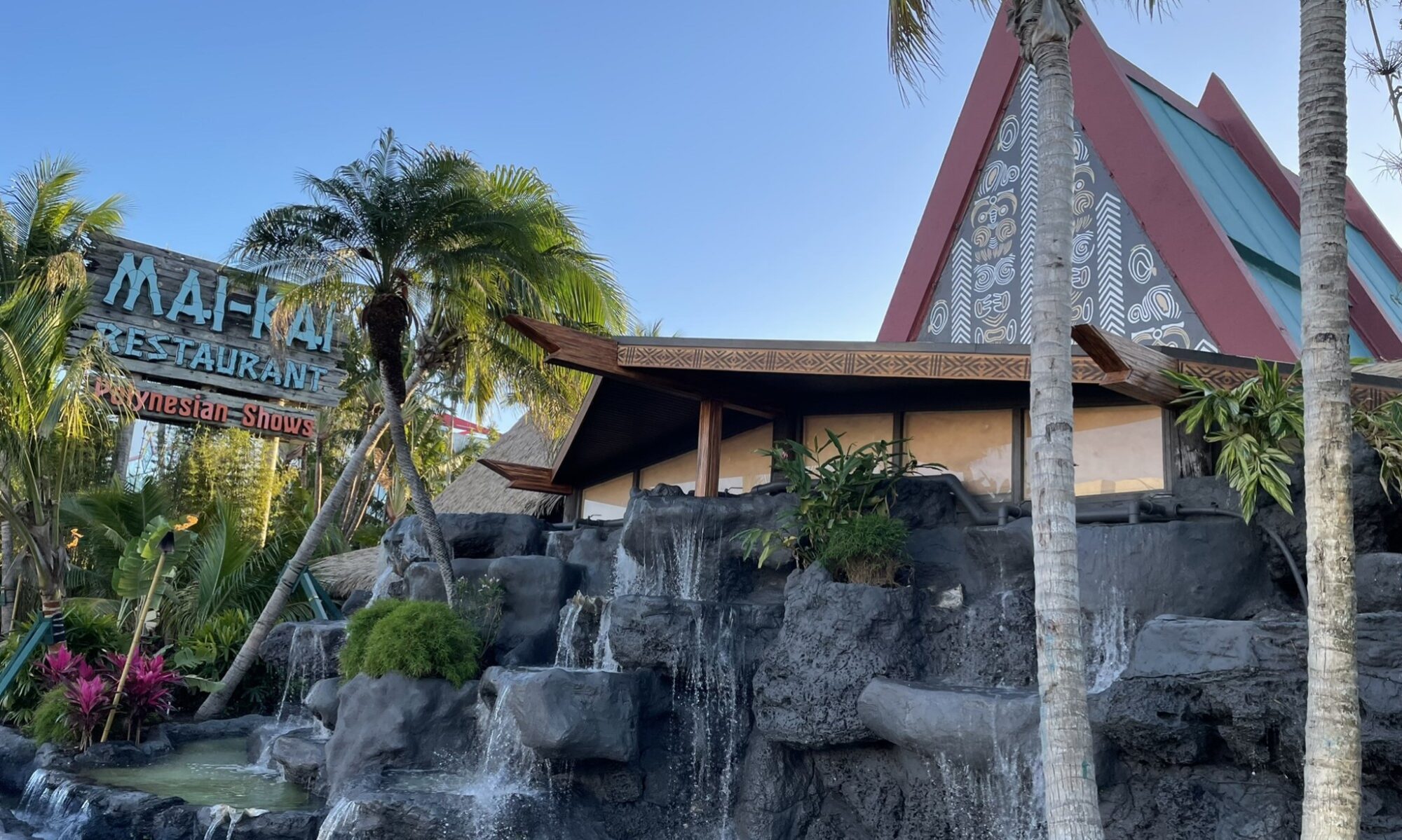
The Hukilau has become a Fort Lauderdale institution, an annual bacchanalia of Tiki culture that draws devotees from around the globe for four days of revelry. The throngs of “villagers” are easy to spot on the south end of tourist-laden State Road A1A. Sporting Hawaiian shirts, exotic tattoos and toting Tiki mugs, they certainly let their passion show.
The 12th annual event – set for this week at two beachside hotels and the legendary Mai-Kai restaurant – could be daunting to the newbie or casual observer. So, for those who just want to get their feet wet in this ocean of Tiki madness, here’s what to look for:
When The Mai-Kai updated its cocktail menu in May 2018, a decision was made to revive one of the classic “lost cocktails” from the notebook of original mixologist Mariano Licudine, who led the bar program from 1956 to 1979. There were nearly a dozen to choose from, many of them ionic drinks that Licudine had brought with him from his days working for Don the Beachcomber in the 1940s and ’50s.
The Suffering Bastard, a longtime off-menu “lost classic,” was added to the permanent menu in May 2018. (Photo by Hurricane Hayward)
Over the past five years, these lost cocktails have been featured at multiple special events, from The Hukilau to The Mai-Kai’s 60th anniversary party. In 2017, a special “Flashback Friday” promotion gave guests the opportunity to sample a different retired cocktail each month on that designated day. While many were popular, one stood out and earned a spot on the main menu, even though it was never on the menu to begin with.
The Suffering Bastard was de rigueur at mid-century Tiki bars. Like many other popular tropical cocktails of the era, it was bastardized (pun intended) and retooled to fit the needs of each particular establishment. The Trader Vic’s version was perhaps the most well-known, instantly recognizable by the iconic Suffering Bastard mug.
The Mai-Kai was no exception, but for reasons unknown it never appeared on the menu. Taking a cue from Trader Vic, Licudine created his Suffering Bastard as an alternative take on the Mai Tai. Of course, The Mai-Kai’s Mai Tai is nothing like Vic’s, and neither is the Suffering Bastard. Licudine did appropriate one distinctive touch from Vic: A large slice of cucumber as garnish. As odd as it seams, it really does work.
The Mai-Kai’s version of the Suffering Bastard features a cucumber garnish, first popularized by Trader Vic. (Photo by Hurricane Hayward, May 2018)
The original Suffering Bastard, sans cucumber, was created in 1942 at Shepheard’s Hotel in Cairo by mixologist Joe Scialom, a fascinating story uncovered by tropical drink historian and author Jeff “Beachbum” Berry. Scialom’s recipe – which includes gin, brandy, Rose’s lime juice, Angostura bitters and ginger beer – was revealed in the 2010 book, Beachbum Berry Remixed. An entire chapter is devoted to Scialom in Berry’s 2013 epic hardcover, Potions of the Caribbean: 500 Years of Tropical Drinks and the People Behind Them.
Before Berry and other Tiki revivalists came along in the 1990s, many of these classic cocktails were long forgotten. Without a slot on the menu at The Mai-Kai, it’s possible that the Suffering Bastard languished for decades in Licudine’s notebook before being rediscovered. The latest version includes a few new tweaks, so we’ve added a new tribute recipe below.
Most classic cocktails at the venerable Mai-Kai Polynesian restaurant – both existing and retired – are descendants of Prohibition-era Tiki bar pioneer Don the Beachcomber. But even when it’s clear which drink is the ancestor, it can become a challenge to pinpoint the correct version.
This tendency of Don the Beachcomber namesake Donn Beach to create multiple versions of the same drink became a point of frustration for tropical drink historian and author Jeff “Beachbum” Berry as more and more historic recipes turned up. One of the most confusing cases is that of Beachcomber’s Gold. Berry devotes five pages in his 2010 book, Remixed, to this dilemma and explores three different recipes.
All three are authentic and represent different eras in Beach’s career. Our task was to find the one that was most likely known best by original Mai-Kai mixologist Mariano Licudine when he created the restaurant’s 1956-57 menu and a drink called Liquid Gold. We also sought the drink that fit The Mai-Kai’s distinctive cocktail style.
With just over a week before The Hukilau invades South Florida for its 12th annual vintage Polynesian Pop extravaganza, attendees can look forward to a great assortment of recently announced goodies from sponsors and the event organizers.
Angostura Rum and Bitters has not only joined The Hukilau as a sponsor, the venerable spirits company is sending brand ambassador David Delaney to the event to mix up some special tropical cocktails. Look for Delaney at the Angostura booth in the Tiki Treasures Bazaar at the Yankee Clipper on Friday, June 7, from 2 p.m. to 5 p.m.
Also joining as a sponsor in 2013 is Barritt’s Ginger Beer, a classic Caribbean brand that will be featured in cocktails Thursday evening in the Tiki Treasures Bazaar. While you’re in the bazaar, keep an eye out for these cocktails and other special events, such as Saturday’s 1 p.m. memorabilia signing by classic pin-up photographer Bunny Yeager and mid-century Polynesian dancer and actress Nani Maka.
The Miami Rum Renaissance Festival celebrated its fifth birthday last month, drawing thousands of industry reps and enthusiasts to a weeklong celebration of one of the world’s most popular spirits.
The April 15-21 event marked the occasion with an impressive new venue, some informative and entertaining expert speakers and, of course, hundreds of product samples available at the weekend Grand Tasting events.
Some of the many product samples awating the expert judges at the Miami Rum Renaissance Festival in April 2013. (Official event photo by Tatu Kaarlas, RefinedVices.com)
The tastings were the big draw, attracting large crowds to the Miami Airport Convention Center (MACC) for every rum under the sun, from Abuelo (Panama) to Zaya (Trinidad & Tobago). It’s this great diversity that has always made rum special, as devotees well know. Unfortunately, a dark cloud threatens to mar rum’s renaissance, but we’ll save that buzzkill for later. First, a few highlights of The Atomic Grog’s experiences during the fest.
The first five days featured the VIP parties and product judging that draw the bulk of the rum industry movers and shakers to South Florida. I caught some of Tuesday’s party at The Mai-Kai in Fort Lauderdale and rubbed elbows with a few notables from the Tiki world. I’m sorry I couldn’t make it down to Miami Beach for one of the Broken Shaker’s daily happy hours. This highly acclaimed bar in the Freehand Miami hostel is on my short list of South Florida cocktail hotspots I need to explore in depth.
South Florida is about to become the epicenter of the rum world, at least for a week, with experts from around the globe descending for the fifth annual Miami Rum Renaissance Festival next Monday through Sunday (April 15-21).
Large portions of the event are geared toward industry representatives (rum tastings, VIP parties, etc.) but there are two very big reasons for ordinary enthusiasts of the cane spirit to be excited:
* First and foremost, there are the Grand Tasting events held from 2 to 7 p.m. on Saturday and Sunday, April 20-21, at the Doubletree Miami Airport Hotel Convention Center. For your $50 admission (plus $5 parking charge) per day, you’ll have the opportunity to taste samples from among more than 200 fine rums, including high-end sipping rums and craft cocktails. In addition, there will be island-style food and vendors selling tropical clothing and decor. Keep an eye out for free giveaways from the rum companies. For the price of three or four trendy cocktails elsewhere in Miami, you’ll enjoy a five-hour total immersion in rum culture and learn a whole lot about what makes the spirit great.
Organizers of The Hukilau have shifted plans for the 12th annual Polynesian Pop weekender into overdrive over the past several weeks, announcing a new cocktail contest, art show, additional entertainment plus the sellout of the host hotel on Fort Lauderdale Beach.
But even though all the specially-discounted rooms at the Sheraton Fort Lauderdale Beach Hotel (aka the Yankee Clipper) have been booked, you still can make reservations at the neighboring Best Western Oceanside. This hotel also offers a special rate for festivalgoers, but you must call to get the discount. Check the accommodations page on the official website for details.
Also, be aware that this just means that the host hotel’s rooms are sold out, not The Hukilau itself. There are plenty of event tickets available, though it’s a good idea to buy sooner rather than later … particularly for the popular symposiums that can sell out. Click here to see all the different pricing levels, ranging from a four-day all-access pass ($187) to individual symposiums for ($20).
Over the course of more than 50 years, the outstanding tropical drinks at The Mai-Kai restaurant have proved to be both enduring and mysterious. And some of the biggest mysteries involve those “lost classics” that no longer appear on the menu, such as the Island Queen.
I thought I had this mystery solved, posting this review last week declaring the drink a rare original concoction by the late, great Mai-Kai mixologist Mariano Licudine. But it appears I was out-sleuthed by another master, Tiki bar historian and author Jeff “Beachbum” Berry. As the Bum correctly pointed out soon after I published the original Island Queen review, it bears a striking resemblance to Don the Beachcomber’s Queen’s Road Cocktail, which appears in his excellent 2007 book, Sippin’ Safari. (Be sure to read the chapter on Licudine and The Mai-Kai.)
So after further research (see ancestor recipe below), the genealogy of the Island Queen has been updated to include it on the long list of Mai-Kai cocktails that are retooled versions of classics created in the 1930s and ’40s by Tiki bar pioneer Donn Beach, aka Don the Beachcomber. The updated Mai-Kai family tree now lists a total of 40 drinks (including 31 on the current menu) that can be traced back to Beach, who originally hired Licudine at his Hollywood, Calif., flagship restaurant back in 1939. Prior to that, Licudine spent five years as a private chauffeur and personal mixologist for the legendary Laurel and Hardy comedy team.
Every February, Tiki cocktail bloggers gather for Tiki Month at The Pegu Blog to share cocktail recipes, tips, tricks and musings about the state of tropical mixology. Why February? It has something to do with an escape from Mother Nature’s frigid wrath, but I don’t really grasp that concept having been marooned in Fort Liquordale for more years than I can remember.
In go the mixers: Martin Cate (right) supervises Rum Rat Pack members Wayne Curtis (left) and Stephen Remsberg as the punch begins to take shape at The 2011 Hukilau at The Mai-Kai. (Photo by Go11Media.com)
Not a bad place to be marooned, however, especially when The Hukilau rolls into town every year. There’s also a little restaurant called The Mai-Kai. Both serve as a beacon, summoning the greatest minds in the Tiki world to an annual bacchanalia of rum and revelry.
The single event that perhaps reached the pinnacle of rum and revelry was the appearance of Jeff “Beachbum” Berry’s “Rum Rat Pack” at The Mai-Kai during The Hukilau in June 2011, which brings us back to Tiki Month. This year’s blog contributions have been entertaining and informative, covering such esoteric topics as homemade ginger syrup, garnishes made from ground coconut and orange peel, and more drink recipes than you can shake a shaker at. There was also something about geeks who re-create recipes they’ve never actually tasted, if you can imagine that.
Lost in all these intricate tropical concoctions is a common conundrum: How do you handle a thirsty mob who can’t wait for you to carefully fillet an orange or toast coconut? The Rum Rat Pack’s Rumposium demonstrated how to solve that problem with style and flair. In one fell swoop, they whipped up a Tiki punch for 200, featuring 240 ounces of six different rums, a jaw-dropping bowl filled with 630 ounces of deliciousness.
The concept of a “Polynesian” cocktail is somewhat of a misnomer. While most tropical drinks have names and imagery that recall Polynesia, most are actually Caribbean rum concoctions reinvented by American restaurateurs. One notable exception is the distinctive Doctor Funk, also sometimes known as Dr. Fong.
The real Doctor Funk (from The Cyclopedia of Samoa, via TikiCentral.com)
Doctor Funk was an actual person as well as a real Polynesian drink. Born in 1844 in Germany, Dr. Bernhard Funk migrated to Samoa around 1881 and was reputedly the first medical practitioner in the capital city. He became friends with Scottish novelist Robert Louis Stevenson (author of Treasure Island and The Strange Case of Dr. Jekyll and Mr. Hyde) and was the bedside doctor when Stevenson died in 1894 in Samoa.
Dr. Funk was not only a skilled doctor but also a mixologist of some note. The Doctor Funk was a notorious drink that became known throughout the region. It was mentioned by travel writer Frederick O’Brien (1869-1932) in his books White Shadows in the South Seas (1919) and Mystic Isles of the South Seas (1921). The latter calls the drink “a portion of absinthe, a dash of grenadine – a syrup of the pomegranate fruit, the juice of two limes, and half a pint of siphon water.” It was apparently served by the doctor as a “medicinal tonic.”
From a Don the Beachcomber menu.
Dr. Funk thrived in Samoa, marrying the daughter of a chief, but health problems caused him to return to Germany, where he died in 1911. After his death, a granite stone was placed in his honor on the shore of the mysterious Lake Lanoto’o in Samoa, where Funk had built a health resort. The secluded lake still contains goldfish, illegally introduced to Samoa by Dr. Funk. For a lot more on the life and times of Bernhard Funk, check out this great research on Tiki Central by Sven Kirsten (bigbrotiki), Tom Duncan (TikiTomD), and many others.
A drink this legendary and rooted in the South Pacific was perfect fodder for Tiki bar pioneers Donn Beach (Don the Beachcomber) and Victor Bergeron (Trader Vic’s). Both created Doctor Funk cocktails in the 1930s and ’40s with pretty much the same flavor profile. But over the years there became so many different versions by Beach, Bergeron and many others, it became impossible to pinpoint a definitive “original” version.
The Dr. Fong cocktail returned to The Mai-Kai in September 2016 during a special event celebrating the release of the book ‘Mai-Kai: History and Mystery of the Iconic Tiki Restaurant.’ (Photo by Hurricane Hayward)
Doctor Funk also inspired variations with names such as Dr. Fong and Dr. Wong. Many of these became synonymous with the (now somewhat politically incorrect) Fu Manchu-style Tiki mug that was widely produced in the mid-century. Restaurants across the country simply invented their own drinks called Doctor Funk or Dr. Fong to go into the mug (see “bilge” at the very bottom of this review).
When The Mai-Kai opened in 1956, the menu included a Dr. Fong cocktail based on one of the Don the Beachcomber versions of Doctor Funk. This is where bartender Mariano Licudine worked for nearly 20 years, mixing the drinks that became the template for most of the original 1956-57 Mai-Kai menu.
Luckily for us, Tiki historian and author Jeff “Beachbum” Berry has over the past 15 years decade published two of Beach’s Doctor Funk recipes, which I’ve included below. In 2016, thanks to another author, guests at The Mai-Kai were finally able to taste the authentic Dr. Fong after an absence of more than 40 years.
The special event also featured several other long-lost cocktails (Hanalei Bay and the Demerara Float) plus two days of gatherings of Mai-Kai enthusiasts from across the country.
Dr. Fong returned again in August 2017 as part of The Mai-Kai’s monthly Flashback Friday promotion, including a special new recipe. See more below under the Tribute recipe notes.