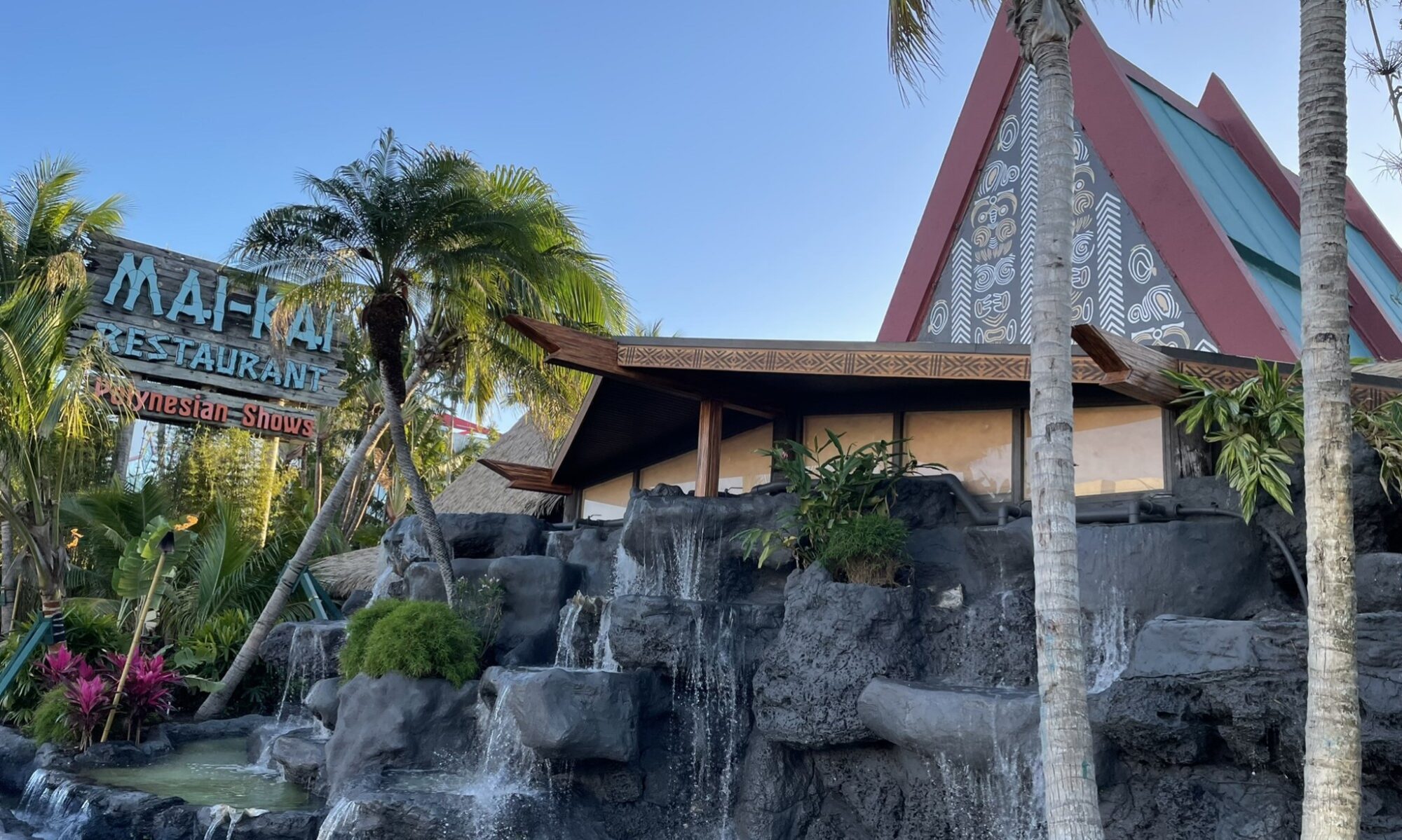
This is the 51st weekly review in our yearlong series exploring the cocktails at the iconic Mai-Kai Polynesian restaurant in Fort Lauderdale, and it marks the completion of all the drinks on the current menu. Next week, we conclude our odyssey with a historic drink that’s no longer on the menu.
From an old Don the Beachcomber menu.
One of the great rituals at The Mai-Kai is ordering the Kona Coffee Grog, a potent after-dinner drink that’s served tableside with a flamboyant pouring of flaming 151 rum. The traditional preparation and presentation of this classic has been passed down to generations of servers, and it remains one of the Fort Lauderdale Polynesian restaurant’s signature experiences.
The Kona Coffee Grog is just as much a throwback to the early days of Tiki as the Zombie or Mai Tai. And the fact that it’s still served in the exact same style only enhances the authenticity. Donn Beach, aka Don the Beachcomber, served many hot drinks in the early days of tropical mixology. There was Hot Buttered Rum, Hot Tiger’s Milk, and Don the Beachcomber’s Coffee Grog. The Kona Coffee Grog was likely a variation of the latter.
Though it appears on the surface to be a simple, light and breezy rum drink, The Mai-Kai’s Tahitian Breeze is actually a complex creation with roots that date back some 90 years to the world’s first Tiki cocktails.
A close cousin of the Hidden Pearl in both look and taste, the Tahitian Breeze evolved from Donn Beach’s Tahitian Rum Punch, one of the original drinks served at Don the Beachcomber in Hollywood, Calif., in the 1930s.
Mariano Licudine, who created The Mai-Kai’s original 1956-57 menu, started working for Donn Beach in 1939 in Hollywood, then spent 16 years at the Don the Beachcomber in Chicago. So he most likely knew the Tahitian Rum Punch very well as it evolved over the years.
A common misconception about tropical drinks is the notion that they’re “girly.” While they do tend to be sweet and flamboyant, many of the best Tiki cocktails – especially those at The Mai-Kai in Fort Lauderdale – are powerfully potent and worthy of any serious drinker, male or female, wahine or kane.
Ordered after dinner, the Wahine Delight arrives dusted with powdered sugar and presented as a desert course. (Photo by Hurricane Hayward, January 2013)
One possible exception is the Wahine Delight, an after-dinner drink most likely aimed at the fairer sex. It’s actually not too cloyingly sweet, a well-balanced and distinctive frozen daiquiri that goes light on the alcohol. Men may even appreciate it, especially as a follow-up to one of the restaurant’s spicy entrees or flaming deserts.
But it’s definitely designed as a lighter alternative to the Zombie and the Jet Pilot and the many other more masculine drinks on the menu.
This is not surprising when you consider the cocktail’s ancestry. The Wahine Delight was originally called the Missionary’s Doom and appeared on the opening day menu in 1956-57. It’s Mariano Licudine’s version of a Don the Beachcomber classic aimed at the fairer sex, the sweet and minty Missionary’s Downfall.
It may sound and look intimidating, but the whopping Sidewinder’s Fang is the perfect cocktail for a couple to share while enjoying a romantic evening at Fort Lauderdale’s landmark Mai-Kai Polynesian restaurant. Typically served in a giant snifter, it’s a fun and accessible cocktail that should appeal to newcomers and tropical drink aficionados alike. Featuring six ounces of rum, it’s suitable for an even larger party.
Molokai Bar server Ashley treats a guest to a Sidewinder’s Fang at The Mai-Kai in February 2019. (Photo by Hurricane Hayward)
The distinctive snifter is sometimes in short supply, so you may receive this giant cocktail in two smaller versions (see photo). But it’s been a long time since we’ve noticed a shortage of glasses, so this unique cocktail experience will live on exactly as it has for more than 60 years. The Mai-Kai is one of the few restaurants in the world to use this rare 64-ounce glass.
The cocktail itself is a classic communal Tiki drink, dominated by fruit juices and similar to the Mystery Drink, just not quite as complex. Many Polynesian restaurants served a Sidewinder’s Fang when exotic drinks flourished in the mid-century. The tribute recipe below is thought to be the original.
Hurricane Hayward joined the Austin Rum Society online to reveal several new rum blends that hope to duplicate The Mai-Kai’s late, great dark Jamaican mixing rum. In the video below, we also enjoyed a Rum Barrel featuring the new recipe and discussed the history of The Mai-Kai …
The Atomic Grog presents new class and symposium at The Hukilau 2019
Hurricane Hayward of The Atomic Grog took guests on an virtual journey to the Caribbean to learn about the key rums and styles that have dominated The Mai-Kai’s acclaimed cocktails for more than 60 years. He was joined by rum expert Stephen Remsberg for an Okole Maluna Cocktail Academy class at the Pier Sixty-Six hotel, and by Cocktail Wonk writer Matt Pietrek for an on-stage symposium at The Mai-Kai. See the event preview
JANUARY 2019: Exploring Demerara rum at The Mai-Kai
Demerara Rum: The Mai-Kai’s Secret Weapon
The Atomic Grog was pleased to present a special happy-hour talk during The Mai-Kai Takeover event, presented by the Magical Tiki Meet-Up and Retro Rekindled. Click here to check out our full event recap, including photos and highlights of our Demerara rum discussion.
********************
Most of the information below is from 2019 and before. Read our historical coverage and check out the news above. Stay tuned for full update, coming soon.
THE RUMS OF THE MAI-KAI
For more than 60 years, The Mai-Kai has carried on the tradition of Tiki forefather Don the Beachcomber by serving some of the world’s most acclaimed tropical drinks. The secret recipes created by Ernest Raymond Beaumont Gantt (aka Donn Beach) in the 1930s and ’40s became the basis for many of the exotic cocktails on the menu when Bob and Jack Thornton opened their Polynesian palace in Fort Lauderdale in 1956.
From Sippin’ Safari: This vintage photo shows Mariano Licudine displaying his rum collection in 1962.
To run the bar program, the Thorntons tapped one of Beach’s top mixologists, Mariano Licudine, who spent 16 years honing his craft at Don the Beachcomber in their native Chicago. Licudine brought more than skills, secret recipes and a penchant for creating his own distinctive cocktails. He brought a great appreciation for rum. That legacy continues today in the drinks that carry on the tradition of Beach, the Thornton brothers and Licudine. Menu:Vintage Don the Beachcomber rum list from 1941
By their very nature, Tiki bars are known for their rums and cocktails highlighting cane spirits. But The Mai-Kai takes it to the extreme. The 48 drinks on Licudine’s original menu called for 43 different brands of rum, reports author and Tiki historian Jeff “Beachbum” Berry in The Mai-Kai chapter of Sippin’ Safari, the seminal 2007 book on Tiki’s unheralded bartenders that was recently expanded and enhanced for a 10th anniversary edition.
The back of an Okole Maluna Society membership card, circa late 1950s.
“Shortly after opening, The Mai-Kai became the largest independent user of rum in the U.S., pouring more than 2,000 cases of Puerto Rican rum in 1958 alone,” Berry wrote in Sippin’ Safari. Some 60 years later, lighter bodied rums from the Spanish-speaking Caribbean islands still make up a large chunk of the total volume of rum poured in The Mai-Kai’s secluded back bars. They play a key role in the many popular drinks on the tourist-friendly mild section of the menu.
But Beach’s true genius, as carried on by his brethren at The Mai-Kai, was the ability to blend rums of different body and character and create an entirely new and bold flavor profile. Many of The Mai-Kai’s most robust cocktails feature three and four different rums, such as the Zombie and Jet Pilot.
A 1941 rum menu from Don the Beachcomber in Chicago, where mixologist Mariano Licudine worked for 16 years before starting The Mai-Kai’s bar program with owners Bob and Jack Thornton in 1956.
The rums that define The Mai-Kai style are straight out of Donn’s playbook. As a counterpoint to the Spanish-style column-stilled rums, Beach often added two English-style pot-stilled rums: The dark and funky rums from Jamaica, and the rich and smoky Demerara rums from Guyana. These have always been the distinctive flavors that define many of The Mai-Kai’s best cocktails, particularly those on the strong section of the menu.
Following is a deep dive into these two rum styles as they’re served at The Mai-Kai today and through history, including discussion and reviews of the current brands and cocktails.
********************
DEMERARA RUMS: Lemon Hart, Hamilton shine in strong, flavorful cocktails
The newest release of the iconic Lemon Hart 151 Demerara rum.
The Mai-Kai began using the latest reboot of Lemon Hart 151 Demerara rum, the iconic mixing rum from Guyana, in September 2016. This black blended overproof rum, which disappeared from the U.S. market in mid-2014, was reintroduced in the summer of 2016 and continues to regain distribution across the country. Lemon Hart’s 80-proof rum (known as Original 1804) is making slower progress, and The Mai-Kai continues to use Hamilton 86 as its standard black blended Demerara rum as of mid-2018.
* Tiki Central: Latest updates on Lemon Hart’s return
It was during the two-year absence of Lemon Hart that Hamilton 151 and 86, also from Guyana, stepped up to fill the void. The Hamilton rums were embraced not only at The Mai-Kai, but at Tiki and craft cocktail bars across the country. While some bars have chosen to stick with Hamilton across the board, The Mai-Kai is splitting the difference with Lemon Hart 151 and Hamilton 86.
Following is a list of the drinks at The Mai-Kai using Lemon Hart and Hamilton rums. The links will connect you with reviews and recipes.
Cocktails featuring Lemon Hart 151 Demerara rum at The Mai-Kai. (Atomic Grog photo, April 2018)
Retired cocktails featuring Demerara rum: In addition to the current drinks listed above, you can also sample a few recipes for drinks that are no longer featured on The Mai-Kai menu. Both of these have made comebacks at special events, so you never know when they will return for an encore. Demerara Cocktail | Demerara Float
HISTORY: The saga of Demerara rums at The Mai-Kai
An ad for the new Lemon Hart 151 rum, which returned to its traditional yellow label after several years off the market in the United States.
What exactly is Demerara rum and why is it so important to Tiki cocktails? According to Berry, aged Demerara rums “are the rich, aromatic, smoky ‘secret weapon’ in most truly memorable tropical drinks.” They hail from the banks of the Demerara River in Guyana, hence the name. The last remaining distillery in Guyana is Demerara Distillers, which produces its own extensive suite of rums under the El Dorado brand. It also supplies all of the world’s Demerara rum, including those bottled by Lemon Hart and Hamilton.
The historic distillery, aka Diamond Distillery, was established in 1670. The rums are made using molasses from local Demerara sugar, which along with the distillery’s special strain of cultured yeast, historic stills and Guyana’s tropical climate, provide a unique combination that yields some of the world’s richest rums. Diamond employs some of the oldest and unique stills the world, including the last wooden pot stills, which can be traced back to the 1730s.
There are more than 20 different styles of rum produced at the distillery, we learned in a 2014 seminar at the Rum Renaissance Festival in Miami. Master distiller Shaun Caleb offered a fascinating look at the inner workings of Diamond Distillery and the excellent El Dorado rums.
The Mai-Kai’s Special Reserve Daiquiri is a throwback to another era with its classic recipe and flamboyant presentation in a frozen ice shell, a lost art that the Tiki cocktail mecca has almost single-handedly helped keep alive for the past half-century.
Jeff “Beachbum” Berry enjoys a Special Reserve Daiquiri at The Hukilau in April 2012. (Photo by Harold Golen)
The Daiquiri – invented in Cuba in the late 19th century and popularized at El Floridita bar in Havana – is not a complex drink. The original recipe is simply lime juice, sugar and rum (shaken, not blended). But in the hands of a master like Donn Beach, aka Don the Beachcomber, this simple sonata became a baroque symphony. Beach, who invented the tropical cocktail in the 1930s and inspired the original Mai-Kai drink menu, had an arsenal of Daiquiris. One of his early recipes likely inspired the Special Reserve Daiquiri.
The high quality and authenticity of the Special Reserve Daiquiri was confirmed in April 2012 at The Hukilau, when the big kahuna of tropical mixology, Jeff “Beachbum” Berry, was spotted with the drink in his hands on multiple occasions over the course of the annual Tiki fest. The author of the definitive books on the subject is known to have a soft spot for aged Appleton rum, which is the star of this cocktail.
Like an ugly stepchild, The Hukilau cocktail at The Mai-Kai is often shunned in favor of its more glamorous siblings. But don’t underestimate this newcomer. It’s one of the more accessible strong drinks and worthy of inclusion on the iconic menu.
The Hukilau (right) with the Black Magic (left) and the Mutiny in April 2012. (Photo by Hurricane Hayward)
The Hukilau was added to the menu in the fall of 2006, named in a contest by attendees of the fifth annual Polynesian Pop festival of the same name. But the contest was merely to name the drink. The actual recipe came from an in-house source and was selected by owner Dave Levy.
We’ve been unable to confirm the drink’s exact creator, but it’s obviously a close relative of both the Mutiny and Black Magic (see photo). All three are served in large snifter or goblet glasses, appear on the strong menu and share many of the same ingredients. We like to call them the “Holy Trinity” of Mai-Kai large-format drinks.
The Hukilau, as it appeared on menu from 2006 until 2014.
Recently, however, The Hukilau lost one of the defining characteristics of the trinity. In early 2016, the recipe was tweaked to remove the “splash of coffee” that had been touted on the menu since its debut. This was done to offer guests who prefer a non-caffeinated cocktail a chance to enjoy one of these signature drinks. There were apparently frequent requests to “hold the Joe.”
The Hukilau is also a bit sweeter than its siblings. It’s perfect for those who may not care for the flavor of coffee and who like their drinks more tart than exotic and spicy. And it’s also a fine way to honor an event that has called The Mai-Kai home since 2003.
**************************
The official menu description THE HUKILAU
The official drink of The Hukilau, an event held yearly at The Mai-Kai, is full flavored with a splash of Appleton Rum.
Okole Maluna Society review and rating
Size: Large
Potency: Strong
The Hukilau, November 2010. (Photo by Hurricane Hayward)
Flavor profile: Passion fruit, tart juices, honey and exotic sweet flavors.
Review: A sweeter and coffee-free alternative to The Mai-Kai’s similar large-format drinks. A smorgasbord of juices and Appleton rum shine through the sweetness to create a perfect balance of flavors.
Ancestry: Added in 2006, The Hukilau is the newest original cocktail on The Mai-Kai’s current menu. The recipe was adjusted in 2016 to remove the coffee and add a secret mix that dates back to the early days of Tiki and Don the Beachcomber.
Bilge: The Hukilau is one of four Mai-Kai cocktails that specifically call for Appleton rum (along with the Shark Bite, Mai-Tai and Special Reserve Daiquiri). No other rum brand is mentioned by name on the current menu.
Agree or disagree? Share your reviews and comments below!
**************************
NEW:Tribute to The Hukilau at The Mai-Kai By The Atomic Grog (version 2.5, updated August 2018)
The Hukilau tribute by The Atomic Grog, August 2018. Glassware: The Hukilau 10th anniversary snifter glass, produced in 2011, designed by Kevin Kidney.
* 2 ounces fresh-squeezed orange juice
* 1 1/2 ounces fresh-squeezed lime juice
* 1 1/2 ounces fresh-squeezed lemon juice
* 1 ounces fresh grapefruit juice
* 1/2 ounce rich honey mix
* 1 1/2 ounces passion fruit syrup
* 1 1/2 ounces light Puerto Rican or Virgin Islands rum
* 2 ounces Appleton rum
* 1/2 ounce Mariano’s Mix #7 (see below)
Blend with up to 1 1/2 cups of crushed ice in a top-down mixer for at least 8 seconds, or until frothy. Pour into a large snifter glass or goblet with more crushed ice to fill.
NEW:Tribute to The Hukilau at The Mai-Kai By The Atomic Grog (version 2.0, updated August 2018)
* 2 ounces fresh-squeezed orange juice
* 1 1/2 ounces fresh-squeezed lime juice
* 1 1/2 ounces fresh-squeezed lemon juice
* 1 ounces fresh grapefruit juice
* 1/2 ounce rich honey mix
* 2 ounces passion fruit syrup
* 1 1/2 ounces light Puerto Rican or Virgin Islands rum
* 2 ounces Appleton rum
The Hukilau tribute by The Atomic Grog, February 2017. Glassware: The Hukilau 10th anniversary snifter glass, produced in 2011, designed by Kevin Kidney. Mugs: The Hukilau 2016 Mai-Kai Mug (left), The Hukilau 2016 Pier 66 Tower Barrel Mug, both by Eekum Bookum.
Blend with up to 1 1/2 cups of crushed ice in a top-down mixer for at least 8 seconds, or until frothy. Pour into a large snifter glass or goblet with more crushed ice to fill.
In the absence of coffee, the addition of Mariano’s Mix #7 in version 2.5 fills the void to keep this cocktail near the top of our rankings. The secret mix adds a sharp anise flavor and exotic richness to temper the sweet and sour elements in this refreshing drink. Version 2.0 is similar to The Hukilau before the reintroduction of the mix and after the removal of coffee. Our original tribute recipe (version 1) is also featured below.
August 2018 updates
This completes the updates of the trinity of strong cocktails served in 24-ounce snifter glasses. Note that in April 2018, The Mai-Kai started using new, heavier goblet-style mugs instead. They’re much less breakable but have the same capacity.
The Mai-Kai now serves The Hukilau (along with the Mutiny and Black Magic) in a large goblet, replacing the more fragile snifter glass. (Photo by Hurricane Hayward, August 2018)
The earlier tribute recipes fell short of filling our similar glasses, so I adjusted all three to feature around 12 ounces of ingredients, similar to the Barrel O’ Rum. When mugs or glasses were unavailable, these drinks routinely swapped vessels, so it follows that they all contain the same volume.
As for the ingredients, the addition of Mariano’s Mix #7 and removal of coffee weren’t the only tweaks. We were forced to remove cinnamon syrup from all of our tribute recipes after learning that this old Don the Beachcomber secret weapon was nowhere to be found at The Mai-Kai. It’s not really missed here, especially in the version that features the spicy #7.
The Hukilau is more accessible than the Black Magic or Mutiny, so we’ve created this tribute as a more mainstream version of those two iconic cocktails. It’s not an exact duplicate, but it’s definitely in the ballpark.
Notes and tips for home mixologists
Bob Roth’s New River Groves in Davie. (Photo by Hurricane Hayward, October 2016)
* There’s a lot of juice in this cocktail, so make sure you use quality, fresh-squeezed versions. As we’ve pointed out in other reviews and this deep dive on Tiki Central, The Mai-Kai looks to South Florida’s Kennesaw for its fresh orange and grapefruit juices. These are fresh-squeezed, pulpy, unpasteurized juices that come straight from Florida citrus groves. Kennesaw juices are sold at old-school South Florida fruit stands, including my favorite, Bob Roth’s New River Groves in Davie, not far from The Mai-Kai. I’ve also seen them pop up recently at area Whole Foods stores. There are other fine orange juice brands, but look for non or lightly pasteurized. Note that Kennesaw rarely offers white grapefruit juice, at least for the retail market. At The Mai-Kai, the style of grapefruit juice changes with the season. The freshest juice is stocked, whether it’s white or red (or sometimes both). Though white is typically preferred in classic cocktails, the Kennesaw red grapefruit juice is the best I’ve tasted and preferable to any canned or bottled white version. One new find, as detailed in that same Tiki Central link, is a fresh white grapefruit juice on the shelf at a local Fresh Market store. Availability seems to be sporadic, unfortunately. The Mai-Kai uses a distinctive, tart Key lime juice (possibly a blend from another food service provider). Squeezing Key limes is not a viable option, so I’ve found that blending a bottled Key lime juice with fresh-squeezed “regular” (aka Persian) limes yields the best result. The Tiki Central post goes into much detail on the types of bottled Key lime juices as well as the recommended blends. If you’re in Florida, look for the 100% natural Terry’s Homemade Key Lime Pie juice. It’s sold by the gallon at New River Groves. It’s by far the best. Finally, it’s fine to use standard fresh-squeezed regular lemons. I’ve been toying with a blend featuring Key West lemon juice, but that may be too tart for some palates.
Honey, Key Lime juice, grapefruit juice and orange juice from Bob Roth’s New River Groves, January 2017. (Photo by Hurricane Hayward)
* Honey mix is another one of those nods to Don the Beachcomber, a historic ingredient that The Mai-Kai features in more than 20 cocktails. To get the proper amount of sweetness, we recommend a rich syrup (2 parts honey to 1 part water). Shake until thoroughly combined, then refrigerate. It should last for a while. And always use Florida Orange Blossom honey. Commercial brands can be found everywhere, but if you’re in Florida, we recommend seeking out locally produced varieties. I always pick up a bottle of the raw, unfiltered honey from McCoy’s in Loxahatchee when I make a juice run to New River Groves (see above). But any good Florida Orange Blossom honey should work fine.
* Passion fruit syrup is another key sweetener, used in more than a dozen cocktails at The Mai-Kai. There’s a hefty amount in this drink, so you’ll want to make sure it’s not too cloyingly sweet. I like to make a homemade syrup following the recipe I first saw in 2007 in Beachbum Berry’s Sippin’ Safari. Monin makes a bottled syrup that’s similar in flavor to The Mai-Kai’s house-made version. There are many other choices, from premium (Small Hand Foods, B.G. Reynolds, Aunty Lilikoi) to budget (Real Syrups, Finest Call) brands.
Appleton Special gold Jamaican rum hasn’t changed, but it’s been rebranded as J.Wray gold. (Photo by Hurricane Hayward, June 2017)
* Jamaican rums are featured in as many as 40 cocktails at The Mai-Kai, and Appleton (from the J. Wray & Nephew distillery) is the brand of choice. [Click here to see our full guide to Appleton rums at The Mai-Kai] The menu description is misleading, as I believe there’s more than a “splash” of Appleton in this drink. You can clearly taste an ounce or two. The original menu description (see above) described a “splash of coffee and Appleton Rum,” then was shortened to remove the coffee. It’s our guess that the splash referred to the coffee, not the rum. In any case, there’s likely 3 1/2 ounces of rum in this drink, similar to the other large snifter/goblet drinks. A light Virgin Islands or Puerto Rican rum (such as Cruzan, Bacardi or Don Q) forms the base. Appleton brings the flavor, and we’re recommending 2 full ounces. It’s unlikely that the premium Appleton Estate Rare Blend is featured here, but feel free to use a splash, up to 1/2 ounce. Our guess is that J. Wray Gold, which was formerly known as Appleton Special, is used here. It’s a lighter bodied gold rum but still has plenty of flavor and just a hint of Jamaican funk. I don’t believe that Signature Blend (formerly known as V/X) is featured, as that is now the substitute for the defunct Kohala Bay in many other cocktails. The Hukilau was never on the list of funky Kohala Bay drinks. And we’ve been told that Reserve Blend is not in stock behind the bar. Therefore, our recommendation would be 1 1/2 ounces J. Wray Gold and 1/2 ounce Appleton Estate Rare Blend. But feel free to use any combination of Appleton rums. You can’t really go wrong.
The Mutiny and The Hukilau in The Molokai bar, February 2017. (Photo by Hurricane Hayward)
* Finally, there’s Mariano’s Mix #7, named for The Mai-Kai’s original mixologist, Mariano Licudine. He was head bartender from 1956 until he retired in 1979 and brought many secret recipes from his 16 years at Don the Beachcomber in Hollywood and (for the majority of those years) Chicago. The Hukilau was created decades after Licudine’s tenure, of course. He passed away in 1980, but his influence can still be felt. The Hukilau originally didn’t contain this mix and was for many years similar to the second tribute recipe above, with the addition of coffee. From time to time, you’ll still get this older version (sans coffee) if the mix is unavailable. Secret mixes were Don the Beachcomber staples, created to both streamline the mixing process and keep his bartenders from stealing his recipes when they moved on to other bars. A few trusted barmen, such as Licudine (and Ray Buhen, who opened the Tiki-Ti in Los Angeles in 1961), either had access to how they were made or reverse engineered their own versions. As the years went by, a few of Licudine’s more obscure syrups disappeared from use when the ingredients became unavailable. Then, in the summer of 2016, we started noticing new flavors in several drinks, such as the Bora Bora. Owner Dave Levy confirmed that indeed these old syrups were being re-created with the help of an old bartender who used to work with Licudine. They’re not exact, but they’re close enough to bring back the historic flavors from the early days of Tiki. Mix #7 tastes like falernum but with floral and anise flavors standing out. In fact, as Beachbum Berry revealed in the new 10th anniversary edition of Sippin’ Safari, Donn Beach had multiple falernum variations. You’ll also find #7 in the Black Magic and Mutiny, used to similar effect to add some extra sweetness and spice to those large cocktails. Though we have no idea what actually goes into the mix, we’ve come up with our best guess at a tribute:
* 1/4 teaspoon of Herbsaint
* 1 tablespoon falernum (Fee Brothers brand preferred)
Combine and keep at room temperature in a glass bottle. Simply increase the proportions to make larger batches. If Herbsaint is unavailable, use Pernod but scale back slightly. The anise flavor should be a background note and not dominate. Herbsaint is slightly more mellow and floral, making it better for this mix. Fee Brothers is the brand of falernum employed by The Mai-Kai. Substitute only rich, non-alcoholic versions such as Beachbum Berry’s Latitude 29 Formula Falernum from Orgeat Works. Both are made in the old style used by Don the Beachcomber (and The Mai-Kai).
It’s very difficult to get the balance of this drink correct, but when you do it’s one of the best, hence the high rating.
Our original tribute recipe containing cinnamon and coffee remains below for reference. It’s arguably just as good, if not better, than those above even though it’s no longer accurate. Enjoy them all.
**************************
Tribute to The Hukilau at The Mai-Kai, v.1
The Hukilau tribute by The Atomic Grog, April 2012. Glassware: The Hukilau 10th anniversary snifter glass, produced in 2011. Mug: The Hukilau 2009 by Munktiki. Both designed by Kevin Kidney.
* 3/4 ounce fresh-squeezed orange juice
* 3/4 ounce fresh-squeezed lime juice
* 3/4 ounce fresh-squeezed lemon juice
* 3/4 ounce fresh grapefruit juice
* 3/4 ounce rich honey mix
* 1 ounce passion fruit syrup
* 1/2 teaspoon rich cinnamon syrup
* 1/4 ounce strong Kona coffee, chilled
* 1 1/2 ounces light Puerto Rican or Virgin Islands rum
* 1 1/2 ounces Appleton rum
Blend with up to 1 1/2 cups of crushed ice in a top-down mixer for 3-5 seconds. Pour into a large snifter glass with more crushed ice to fill.
Notes and tips for home mixologists
* The amount of orange juice required may depend on whether you use fresh-squeezed (preferred) or a bottled brand. If you’re tasting too much OJ in the final mix, just reduce to 1/2 ounce. You also may need to slightly adjust the coffee, depending on its strength.
* Kona coffee was our original recommendation, and it works fine if you brew it strong (up to double strength). The Mutiny and Black Magic reviews go into much detail on chilled coffee in The Mai-Kai’s cocktails, including the recent revelation that Colombian coffee is actually the style of choice. It features a heavier, darker flavor and can be used at standard strength.
* B.G. Reynolds makes the intense, rich cinnamon syrup that you’ll need in this version. Feel free to use your own homemade syrup. There are many recipes online or in Beachbum Berry’s books. If it’s on the lighter side, just increase to taste.
Postscript
Mahalo to the Tiki Central members and bloggers who took a liking to our original tribute and shared their photos and reviews online. The most recent was Joe Garcia, who posted his take in February 2018 as part of The Pegu Blog’s annual Tiki Month blogging extravaganza.
We hope you’ll find our latest versions above just as compelling (and delicious).
There are many great cocktail debates, most notably the Martini (gin or vodka?) and Old Fashioned (rye or bourbon?). At The Mai-Kai in Fort Lauderdale, it’s the Mutiny vs. the Black Magic in an epic battle between two classic rum-and-coffee cocktails.
The Mutiny is served in a heavier but still voluminous mug, which made its debut in April 2018. (Photo by Hurricane Hayward)
The only way to truly compare these titans until recently was to sit down at the restaurant’s legendary Molokai bar and taste them side-by-side. This can be a daunting task since they’re both very strong and very large cocktails, not that we haven’t tried many times.
But thanks to our research, you can give it a whirl in your home bar with the tribute recipes posted below and on the Black Magic review. These aren’t simple drinks, but we’re sure you’ll find the results well worth the effort.
I pitch my tent solidly in the Mutiny camp. It’s always been decidedly higher in my Mai-Kai cocktail ratings (currently sitting at No. 10) and has an incredible complexity that keeps drawing me back. The Black Magic isn’t far behind at No. 14.
So where did these distinctive cocktails come from, and why are they so similar? The Black Magic came first, reportedly created before The Mai-Kai’s opening by mixologist Mariano Licudine, who was then working for Don the Beachcomber. It appeared on the original 1956 Mai-Kai menu and was joined some 15 years later by the Mutiny.
The Mutiny stands above the Black Magic and The Hukilau in the Atomic Grog ratings. (Photo by Hurricane Hayward, November 2010)
According to legend, the Mutiny was conceived on one of the many Mai-Kai staff fishing trips at which the participants always brought an ample supply of two cocktails: the Black Magic and Barrel O’ Rum. According to the story, there was a rebellion against those two drinks always being featured. To quell an impending mutiny, an idea was hatched to somehow combine them into one monster drink, and the Mutiny was born.
It’s unclear if they were actually mixed together that day on the boat. More likely, Licudine put his talents to work later to create an amalgamation of two of the most popular drinks on the menu. This would not be out of line for the owners to request. The cocktails already share many of the same ingredients, so it took just a few tweaks to yield some amazing results.
The Mutiny has been cited as a favorite of the late Mai-Kai co-owner Bob Thornton, so perhaps he was the driving force behind the drink’s creation. Over the years, it’s been mentioned as favorite by a who’s who of Tiki revival VIPs, including bar owners and authors Jeff “Beachbum” Berry and Martin Cate, plus Tiki Oasis co-founder Otto von Stroheim.
Prior to the opening of The Mai-Kai in 1956, there were perhaps other icy cocktails that employed dark rum and coffee as key ingredients. But none perfected it quite like the Black Magic.
From a 1963 Mai-Kai calendar. (Courtesy of TheSwankPad.org)
The drink that has spawned dozens of imitators – and even two similar concoctions at The Mai-Kai – has taken on legendary status in the Tiki cocktail community. The Black Magic is the oldest of what some call the “Holy Trinity” of large snifter drinks at The Mai-Kai: The Black Magic, Mutiny and The Hukilau.
One of the keys to this drink is a distinctive dark rum favored by original Mai-Kai mixologist Mariano Licudine: Dagger was a dark Jamaican brand that stopped production some time ago. It became somewhat of a holy grail of Tiki mixologists looking to duplicate the key flavor in many Mai-Kai cocktails, especially the Black Magic.
Kohala Bay dark Jamaican rum was a key ingredient in many Mai-Kai cocktails. (Photo by Hurricane Hayward, March 2012)
Needless to say, we immediately went on an intensive search, but short of taking a trip to Jamaica it was nearly impossible to locate. We were told it was being imported only to Florida, and The Mai-Kai was one of only two bars to serve it. After some digging, however, we miraculously found a rare retail outlet that carried Kohala Bay and immediately stocked up. Our discovery of Kohala Bay sparked many other tribute recipes that you’ll find in this guide, and also spurred many other home mixologists to seek out the rum. Click here for more on the history of Kohala Bay at The Mai-Kai.
But all good things must come to an end. Kohala Bay was taken off the market in April 2016 and has not returned. While still seeking out an appropriate dark and funky run to fill the bill, The Mai-Kai switched to one of the Appleton Estate rums as its dark Jamaican mixer. Then, suddenly, a new rum appeared in April 2019. It’s a secret in-house multi-rum blend, similar to one of those we had been touting here on the blog. Click here for an in-depth guide along with all the suggested Kohala Bay substitutes.
The Black Magic is served in The Molokai bar in October 2016. It’s not really raining. That’s The Mai-Kai’s special windows that simulate a calming tropical downpour. (Photo by Hurricane Hayward)
The name Black Magic comes from the combination of dark rums and coffee, which sets this drink apart from most others from its era. It was reportedly created by Licudine while he was still working for Donn Beach as the No. 2 bartender at the Don the Beachcomber restaurant in Chicago. But even Beach’s top men were not given the opportunity to contribute their own creations to his legendary drink menu.
Lured to Fort Lauderdale to run The Mai-Kai’s bar and create what would decades later become an iconic menu in its own right, Licudine borrowed heavily from Beach’s classics but also added his own flair (Mara-Amu, Derby Daiquiri, etc.). The Black Magic may be his crowning achievement, and it was his first creation to appear on a Mai-Kai menu.
While it’s not nearly as complex, an early Don the Beachcomber cocktail from the 1930s called the Jamoca could possibly have influenced Licudine, since he worked at Don the Beachcomber in Los Angeles at the tail end of that decade. As revealed by Tiki cocktail historian Jeff “Beachbum” Berry in his 2007 book, Sippin’ Safari, the Jamoca contains 1/2 ounce fresh lime juice, 1/2 ounce coffee syrup, 1 ounce chilled coffee, 1 ounce gold Puerto Rican rum, 1 ounce gold Jamaican rum, and 4 ounces of crushed ice. Blended at high speed for 5 seconds and poured into a specialty glass, it’s a coffee-heavy drink that hits few of the high notes later achieved by Licudine with the Black Magic. Berry theorized that it may have been an early Donn Beach experiment inspired by turn-of-the-century soda fountain fare. It’s historically worth noting, but probably not a true ancestor of the Black Magic. We consider this classic to be a true Mariano Licudine original.
Not to be confused with the deadly 151 Swizzle, the Mai-Kai Swizzle is a sweet and fruity mild drink that nevertheless rises above the mundane with a unique combination of juices and syrups plus a healthy dose of gold Jamaican rum.
Authentic swizzle sticks come from trees native to the Caribbean. (Photo by Hurricane Hayward, March 2012)
It also sheds some light on a unique technique called swizzling. Many drinks with swizzle in their name are simply shaken or blended (as The Mai-Kai likely does), but a traditional swizzle follows a tried-and-true method that originated in the Caribbean.
Most mixologists today will use a quality bar spoon to swizzle a drink. Simply put: Fill a glass or shaker with your cocktail ingredients and crushed ice, insert the spoon and quickly spin the handle back and forth between the palms of both hands. This will quickly mix/blend the drink, and if you’re doing it correctly the glass or shaker will quickly become cold and frosty, and your cocktail will be ready to drink.