It may sound and look intimidating, but the whopping Sidewinder’s Fang is the perfect cocktail for a couple to share while enjoying a romantic evening at Fort Lauderdale’s landmark Mai-Kai Polynesian restaurant. Typically served in a giant snifter, it’s a fun and accessible cocktail that should appeal to newcomers and tropical drink aficionados alike. Featuring six ounces of rum, it’s suitable for an even larger party.
Molokai Bar server Ashley treats a guest to a Sidewinder’s Fang at The Mai-Kai in February 2019. (Photo by Hurricane Hayward)
The distinctive snifter is sometimes in short supply, so you may receive this giant cocktail in two smaller versions (see photo). But it’s been a long time since we’ve noticed a shortage of glasses, so this unique cocktail experience will live on exactly as it has for more than 60 years. The Mai-Kai is one of the few restaurants in the world to use this rare 64-ounce glass.
The cocktail itself is a classic communal Tiki drink, dominated by fruit juices and similar to the Mystery Drink, just not quite as complex. Many Polynesian restaurants served a Sidewinder’s Fang when exotic drinks flourished in the mid-century. The tribute recipe below is thought to be the original.
Hurricane Hayward joined the Austin Rum Society online to reveal several new rum blends that hope to duplicate The Mai-Kai’s late, great dark Jamaican mixing rum. In the video below, we also enjoyed a Rum Barrel featuring the new recipe and discussed the history of The Mai-Kai …
The Atomic Grog presents new class and symposium at The Hukilau 2019
Hurricane Hayward of The Atomic Grog took guests on an virtual journey to the Caribbean to learn about the key rums and styles that have dominated The Mai-Kai’s acclaimed cocktails for more than 60 years. He was joined by rum expert Stephen Remsberg for an Okole Maluna Cocktail Academy class at the Pier Sixty-Six hotel, and by Cocktail Wonk writer Matt Pietrek for an on-stage symposium at The Mai-Kai. See the event preview
JANUARY 2019: Exploring Demerara rum at The Mai-Kai
Demerara Rum: The Mai-Kai’s Secret Weapon
The Atomic Grog was pleased to present a special happy-hour talk during The Mai-Kai Takeover event, presented by the Magical Tiki Meet-Up and Retro Rekindled. Click here to check out our full event recap, including photos and highlights of our Demerara rum discussion.
********************
Most of the information below is from 2019 and before. Read our historical coverage and check out the news above. Stay tuned for full update, coming soon.
THE RUMS OF THE MAI-KAI
For more than 60 years, The Mai-Kai has carried on the tradition of Tiki forefather Don the Beachcomber by serving some of the world’s most acclaimed tropical drinks. The secret recipes created by Ernest Raymond Beaumont Gantt (aka Donn Beach) in the 1930s and ’40s became the basis for many of the exotic cocktails on the menu when Bob and Jack Thornton opened their Polynesian palace in Fort Lauderdale in 1956.
From Sippin’ Safari: This vintage photo shows Mariano Licudine displaying his rum collection in 1962.
To run the bar program, the Thorntons tapped one of Beach’s top mixologists, Mariano Licudine, who spent 16 years honing his craft at Don the Beachcomber in their native Chicago. Licudine brought more than skills, secret recipes and a penchant for creating his own distinctive cocktails. He brought a great appreciation for rum. That legacy continues today in the drinks that carry on the tradition of Beach, the Thornton brothers and Licudine. Menu:Vintage Don the Beachcomber rum list from 1941
By their very nature, Tiki bars are known for their rums and cocktails highlighting cane spirits. But The Mai-Kai takes it to the extreme. The 48 drinks on Licudine’s original menu called for 43 different brands of rum, reports author and Tiki historian Jeff “Beachbum” Berry in The Mai-Kai chapter of Sippin’ Safari, the seminal 2007 book on Tiki’s unheralded bartenders that was recently expanded and enhanced for a 10th anniversary edition.
The back of an Okole Maluna Society membership card, circa late 1950s.
“Shortly after opening, The Mai-Kai became the largest independent user of rum in the U.S., pouring more than 2,000 cases of Puerto Rican rum in 1958 alone,” Berry wrote in Sippin’ Safari. Some 60 years later, lighter bodied rums from the Spanish-speaking Caribbean islands still make up a large chunk of the total volume of rum poured in The Mai-Kai’s secluded back bars. They play a key role in the many popular drinks on the tourist-friendly mild section of the menu.
But Beach’s true genius, as carried on by his brethren at The Mai-Kai, was the ability to blend rums of different body and character and create an entirely new and bold flavor profile. Many of The Mai-Kai’s most robust cocktails feature three and four different rums, such as the Zombie and Jet Pilot.
A 1941 rum menu from Don the Beachcomber in Chicago, where mixologist Mariano Licudine worked for 16 years before starting The Mai-Kai’s bar program with owners Bob and Jack Thornton in 1956.
The rums that define The Mai-Kai style are straight out of Donn’s playbook. As a counterpoint to the Spanish-style column-stilled rums, Beach often added two English-style pot-stilled rums: The dark and funky rums from Jamaica, and the rich and smoky Demerara rums from Guyana. These have always been the distinctive flavors that define many of The Mai-Kai’s best cocktails, particularly those on the strong section of the menu.
Following is a deep dive into these two rum styles as they’re served at The Mai-Kai today and through history, including discussion and reviews of the current brands and cocktails.
********************
DEMERARA RUMS: Lemon Hart, Hamilton shine in strong, flavorful cocktails
The newest release of the iconic Lemon Hart 151 Demerara rum.
The Mai-Kai began using the latest reboot of Lemon Hart 151 Demerara rum, the iconic mixing rum from Guyana, in September 2016. This black blended overproof rum, which disappeared from the U.S. market in mid-2014, was reintroduced in the summer of 2016 and continues to regain distribution across the country. Lemon Hart’s 80-proof rum (known as Original 1804) is making slower progress, and The Mai-Kai continues to use Hamilton 86 as its standard black blended Demerara rum as of mid-2018.
* Tiki Central: Latest updates on Lemon Hart’s return
It was during the two-year absence of Lemon Hart that Hamilton 151 and 86, also from Guyana, stepped up to fill the void. The Hamilton rums were embraced not only at The Mai-Kai, but at Tiki and craft cocktail bars across the country. While some bars have chosen to stick with Hamilton across the board, The Mai-Kai is splitting the difference with Lemon Hart 151 and Hamilton 86.
Following is a list of the drinks at The Mai-Kai using Lemon Hart and Hamilton rums. The links will connect you with reviews and recipes.
Cocktails featuring Lemon Hart 151 Demerara rum at The Mai-Kai. (Atomic Grog photo, April 2018)
Retired cocktails featuring Demerara rum: In addition to the current drinks listed above, you can also sample a few recipes for drinks that are no longer featured on The Mai-Kai menu. Both of these have made comebacks at special events, so you never know when they will return for an encore. Demerara Cocktail | Demerara Float
HISTORY: The saga of Demerara rums at The Mai-Kai
An ad for the new Lemon Hart 151 rum, which returned to its traditional yellow label after several years off the market in the United States.
What exactly is Demerara rum and why is it so important to Tiki cocktails? According to Berry, aged Demerara rums “are the rich, aromatic, smoky ‘secret weapon’ in most truly memorable tropical drinks.” They hail from the banks of the Demerara River in Guyana, hence the name. The last remaining distillery in Guyana is Demerara Distillers, which produces its own extensive suite of rums under the El Dorado brand. It also supplies all of the world’s Demerara rum, including those bottled by Lemon Hart and Hamilton.
The historic distillery, aka Diamond Distillery, was established in 1670. The rums are made using molasses from local Demerara sugar, which along with the distillery’s special strain of cultured yeast, historic stills and Guyana’s tropical climate, provide a unique combination that yields some of the world’s richest rums. Diamond employs some of the oldest and unique stills the world, including the last wooden pot stills, which can be traced back to the 1730s.
There are more than 20 different styles of rum produced at the distillery, we learned in a 2014 seminar at the Rum Renaissance Festival in Miami. Master distiller Shaun Caleb offered a fascinating look at the inner workings of Diamond Distillery and the excellent El Dorado rums.
There are many great cocktail debates, most notably the Martini (gin or vodka?) and Old Fashioned (rye or bourbon?). At The Mai-Kai in Fort Lauderdale, it’s the Mutiny vs. the Black Magic in an epic battle between two classic rum-and-coffee cocktails.
The Mutiny is served in a heavier but still voluminous mug, which made its debut in April 2018. (Photo by Hurricane Hayward)
The only way to truly compare these titans until recently was to sit down at the restaurant’s legendary Molokai bar and taste them side-by-side. This can be a daunting task since they’re both very strong and very large cocktails, not that we haven’t tried many times.
But thanks to our research, you can give it a whirl in your home bar with the tribute recipes posted below and on the Black Magic review. These aren’t simple drinks, but we’re sure you’ll find the results well worth the effort.
I pitch my tent solidly in the Mutiny camp. It’s always been decidedly higher in my Mai-Kai cocktail ratings (currently sitting at No. 10) and has an incredible complexity that keeps drawing me back. The Black Magic isn’t far behind at No. 14.
So where did these distinctive cocktails come from, and why are they so similar? The Black Magic came first, reportedly created before The Mai-Kai’s opening by mixologist Mariano Licudine, who was then working for Don the Beachcomber. It appeared on the original 1956 Mai-Kai menu and was joined some 15 years later by the Mutiny.
The Mutiny stands above the Black Magic and The Hukilau in the Atomic Grog ratings. (Photo by Hurricane Hayward, November 2010)
According to legend, the Mutiny was conceived on one of the many Mai-Kai staff fishing trips at which the participants always brought an ample supply of two cocktails: the Black Magic and Barrel O’ Rum. According to the story, there was a rebellion against those two drinks always being featured. To quell an impending mutiny, an idea was hatched to somehow combine them into one monster drink, and the Mutiny was born.
It’s unclear if they were actually mixed together that day on the boat. More likely, Licudine put his talents to work later to create an amalgamation of two of the most popular drinks on the menu. This would not be out of line for the owners to request. The cocktails already share many of the same ingredients, so it took just a few tweaks to yield some amazing results.
The Mutiny has been cited as a favorite of the late Mai-Kai co-owner Bob Thornton, so perhaps he was the driving force behind the drink’s creation. Over the years, it’s been mentioned as favorite by a who’s who of Tiki revival VIPs, including bar owners and authors Jeff “Beachbum” Berry and Martin Cate, plus Tiki Oasis co-founder Otto von Stroheim.
Prior to the opening of The Mai-Kai in 1956, there were perhaps other icy cocktails that employed dark rum and coffee as key ingredients. But none perfected it quite like the Black Magic.
From a 1963 Mai-Kai calendar. (Courtesy of TheSwankPad.org)
The drink that has spawned dozens of imitators – and even two similar concoctions at The Mai-Kai – has taken on legendary status in the Tiki cocktail community. The Black Magic is the oldest of what some call the “Holy Trinity” of large snifter drinks at The Mai-Kai: The Black Magic, Mutiny and The Hukilau.
One of the keys to this drink is a distinctive dark rum favored by original Mai-Kai mixologist Mariano Licudine: Dagger was a dark Jamaican brand that stopped production some time ago. It became somewhat of a holy grail of Tiki mixologists looking to duplicate the key flavor in many Mai-Kai cocktails, especially the Black Magic.
Kohala Bay dark Jamaican rum was a key ingredient in many Mai-Kai cocktails. (Photo by Hurricane Hayward, March 2012)
Needless to say, we immediately went on an intensive search, but short of taking a trip to Jamaica it was nearly impossible to locate. We were told it was being imported only to Florida, and The Mai-Kai was one of only two bars to serve it. After some digging, however, we miraculously found a rare retail outlet that carried Kohala Bay and immediately stocked up. Our discovery of Kohala Bay sparked many other tribute recipes that you’ll find in this guide, and also spurred many other home mixologists to seek out the rum. Click here for more on the history of Kohala Bay at The Mai-Kai.
But all good things must come to an end. Kohala Bay was taken off the market in April 2016 and has not returned. While still seeking out an appropriate dark and funky run to fill the bill, The Mai-Kai switched to one of the Appleton Estate rums as its dark Jamaican mixer. Then, suddenly, a new rum appeared in April 2019. It’s a secret in-house multi-rum blend, similar to one of those we had been touting here on the blog. Click here for an in-depth guide along with all the suggested Kohala Bay substitutes.
The Black Magic is served in The Molokai bar in October 2016. It’s not really raining. That’s The Mai-Kai’s special windows that simulate a calming tropical downpour. (Photo by Hurricane Hayward)
The name Black Magic comes from the combination of dark rums and coffee, which sets this drink apart from most others from its era. It was reportedly created by Licudine while he was still working for Donn Beach as the No. 2 bartender at the Don the Beachcomber restaurant in Chicago. But even Beach’s top men were not given the opportunity to contribute their own creations to his legendary drink menu.
Lured to Fort Lauderdale to run The Mai-Kai’s bar and create what would decades later become an iconic menu in its own right, Licudine borrowed heavily from Beach’s classics but also added his own flair (Mara-Amu, Derby Daiquiri, etc.). The Black Magic may be his crowning achievement, and it was his first creation to appear on a Mai-Kai menu.
While it’s not nearly as complex, an early Don the Beachcomber cocktail from the 1930s called the Jamoca could possibly have influenced Licudine, since he worked at Don the Beachcomber in Los Angeles at the tail end of that decade. As revealed by Tiki cocktail historian Jeff “Beachbum” Berry in his 2007 book, Sippin’ Safari, the Jamoca contains 1/2 ounce fresh lime juice, 1/2 ounce coffee syrup, 1 ounce chilled coffee, 1 ounce gold Puerto Rican rum, 1 ounce gold Jamaican rum, and 4 ounces of crushed ice. Blended at high speed for 5 seconds and poured into a specialty glass, it’s a coffee-heavy drink that hits few of the high notes later achieved by Licudine with the Black Magic. Berry theorized that it may have been an early Donn Beach experiment inspired by turn-of-the-century soda fountain fare. It’s historically worth noting, but probably not a true ancestor of the Black Magic. We consider this classic to be a true Mariano Licudine original.
Many folks skip right over The Mai-Kai’s “mild” cocktails, heading straight for the medium-strength classics and high-octane strong drinks on the voluminous menu. But that would be a mistake.
There are many tasty cocktails on the less-intense side of the menu, including the Samoan Grog, one of the top picks among all the “mild” drinks. In the case of this and several others, “mild” is a misnomer.
Sure, it contains less alcohol than some of its stronger brethren, but the Samoan Grog packs quite a punch with its complex, exotic flavor profile. And like more than half the drinks on the menu, it’s a descendant of a Don the Beachcomber classic, the Colonial Grog (see ancestor recipe below).
Original Mai-Kai mixologist Mariano Licudine had a knack for turning old-school Don the Beachcomber cocktails from the 1930s and ’40s into sweeter, more accessible Mai-Kai staples. Sometimes, like in this example, all it took was a few simple tweaks.
This cocktail is also an example of how research into the link between Don the Beachcomber and The Mai-Kai can sometimes take a few twists and turns. It was originally thought that the Samoan Grog was a descendant of Don’s Own Grog, a similar drink that appeared in Beachbum Berry’s Sippin’ Safari in 2007. That drink dated back to to the 1930s, when Licudine worked at the flagship Don the Beachcomber location in Hollywood. So I was fairly certain that this had to be the inspiration for The Mai-Kai’s mild drink, which has been on the menu since opening day in 1956.
And right there in the middle of Chapter 5 is a full page dedicated to the Colonial Grog, which bears a striking resemblance to the Samoan Grog. Not surprisingly, this circa 1944 (previously unpublished) recipe comes from the private papers of Mariano Licudine, who worked at Don the Beachcomber from 1939 to 1956. You’ll find the recipe below, along with instructions on how to make its unique ice shell.
The Samoan Grog may not get the attention of its stronger cohorts on The Mai-Kai menu, but it’s a classic example of cocktail history in a glass.
One of the most iconic images of the tropical drink is a vessel made from a hollowed-out pineapple. This over-the-top cocktail experience has been perfected at The Mai-Kai with the classic Piña Passion.
The Mai-Kai’s Piña Passion, served in The Molokai bar in June 2016 with a 60th anniversary swizzle stick. (Photo by Hurricane Hayward)
The Piña Passion is served in a fresh pineapple that guests can take home. The one exception is during happy hour in The Molokai bar, when you’ll have to settle for having the drink in an old fashioned glass.
If you ever get a chance to take a peek into The Mai-Kai’s main service bar, tucked way behind the kitchen and hidden from guests, you’ll find cases of pineapples awaiting their fate. [See photo]
Drinks in pineapples were staples on tropical-themed cocktail menus across the country during Tiki’s heyday in the 1950s and 1960s. You can still find them at old-school establishments such as San Francisco’s Tonga Room (est. 1945) and Chicago’s temple of Witco, Hala Kahiki (est 1966). In the Hawaiian language, a pineapple is called “hala kahiki.”
A postcard shows a server in the early years of The Molokai bar holding the welcoming Piña Passion. (MaiKaiHistory.com)
Even in the dark days of Tiki in the 1970s and ’80s, pineapple drinking vessels remained essential on cruise ships and resorts in exotic locales. They go hand-in-hand with the concept of a tropical paradise.
They’re not as easy to find at today’s smaller Tiki and craft cocktail bars, which tend to favor traditional glassware and ceramic mugs. But this is changing in a big way thanks to a new breed of craftsmen who are taking Tiki hospitality to a whole new level.
At Smuggler’s Cove in San Francisco, one of the most popular events presented by owner Martin Cate and his team is Domingo de Piña (Pineapple Sunday), which features a selection of cocktails served in pineapples. We recommend Cate’s book – Smuggler’s Cove: Exotic Cocktails, Rum and the Cult of Tiki (2016) – for more in-depth info and recipes for several tasty drinks served in pineapples.
There’s nothing more welcoming than a server in The Molokai bar at The Mai-Kai with a tray full of exotic cocktails, including a Piña Passion. (The Palm Beach Post / 2005 file photo)
Italy’s Daniele Dalla Pola, who built upon the success of his Nu Lounge Bar to open Esotico Miami in August 2019, is also a big proponent of the spiky fruit. His new exotic bar and restaurant features both food and drink served in fresh pineapples. At The Hukilau 2017, he presented two Okole Maluna Cocktail Academy classes called “Pineapple Paradise” with information and advanced techniques on using the hospitable fruit in tropical drinks.
Of course, the pineapple is iconic as the worldwide symbol of hospitality. It was so sought-after in colonial times that people would rent them for a day to use as a party decoration. Considered the world’s most exotic fruit, pineapples were brought back to Europe by Columbus and other explorers. George Washington praised the fruit in his diary, noting that among his favorite foods, “none pleases my tastes” like a pineapple.
Because of their scarcity and high price, pineapples were typically served only to prestigious guests, and even those who could not afford them picked up on the image to share the sentiment of a special welcome. Towns, inns and households began displaying images of the pineapple to convey a sense of welcoming. You can find pineapple images on historic buildings around the world.
The mysterious Zula #1 is easily one of the most curious (and deliciously distinctive) cocktails on The Mai-Kai’s tropical drink menu. And, as usual, it has a fascinating back-story.
Zula #1 (left) and Zula #2, February 2012. (Photo by Hurricane Hayward)
The cocktail’s flavors are just as exotic as its origins, which both took us years to figure out. The pineapple-forward taste is unlike any other you’ll find at The Mai-Kai.
But there’s another secret about Zula #1 that not many guests may be aware of: It shares its name (and flavor profile) with a secret off-menu sister drink, the smaller and sweeter Zula #2. But it wasn’t always that mysterious.
Long-stemmed glassware was extremely popular in the 1950s. You’ll find a dozen cocktails on early menus using the elegant coupe glass, which faded from use at The Mai-Kai but made a big comeback at craft cocktail bars in the early 21st century.
The Mai-Kai’s original cocktail menu, circa 1957.
By 1979, when the menu had been arranged in its now-familiar “mild,” “medium” and “strong” groupings, the names had changed slightly to Zula #1 (strong) and Zula #2 (mild), but the coupe glass endured. We’ve seen menus from the ’80s that still feature Zula #2. But by the 1990s it was gone, never to be seen on a menu again.
What many didn’t realize as the years went by, however, is that you could still order the milder Zula. By the time I started bellying up to the bar in the 2000s, it was a distant memory. I finally discovered it while researching the history of Zula #1 for this cocktail guide.
Is this the source of the name “Zula”? While doing research for Hulaween 2016, we discovered a vintage Betty Boop clip from 1937 called “Zula Hula.” Click on the image to watch.
I give credit to Tiki Central friends for helping track down the drink’s origins. As we know now, a majority of the vintage cocktails served at South Florida’s Polynesian palace (32 at last count) can be traced back to drinks created by tropical drink godfather Donn Beach (aka Don the Beachcomber).
Most are relatively easy to figure out. Some (Rum Julep, 151 Swizzle) have the exact same name, while others are obvious tweaks (Cobra’s Fang to Cobra’s Kiss, Don’s Pearl to Hidden Pearl).
However, nothing in Beach’s vast repertoire seemed to resemble the Zula. Or so we thought. It was actually right there under our nose since 2007 in Beachbum Berry’s Sippin’ Safari: Penang Afrididi. Don’t ask us how the names relate, but the flavor profile is indeed remarkably similar. The clincher: There are two versions of Don the Beachcomber’s original, known as Penang Afrididi #1 and Penang Afrididi #2.
The Mai-Kai: History, Mystery & Adventure By Hurricane Hayward and Tim “Swanky” Glazner, February 2012
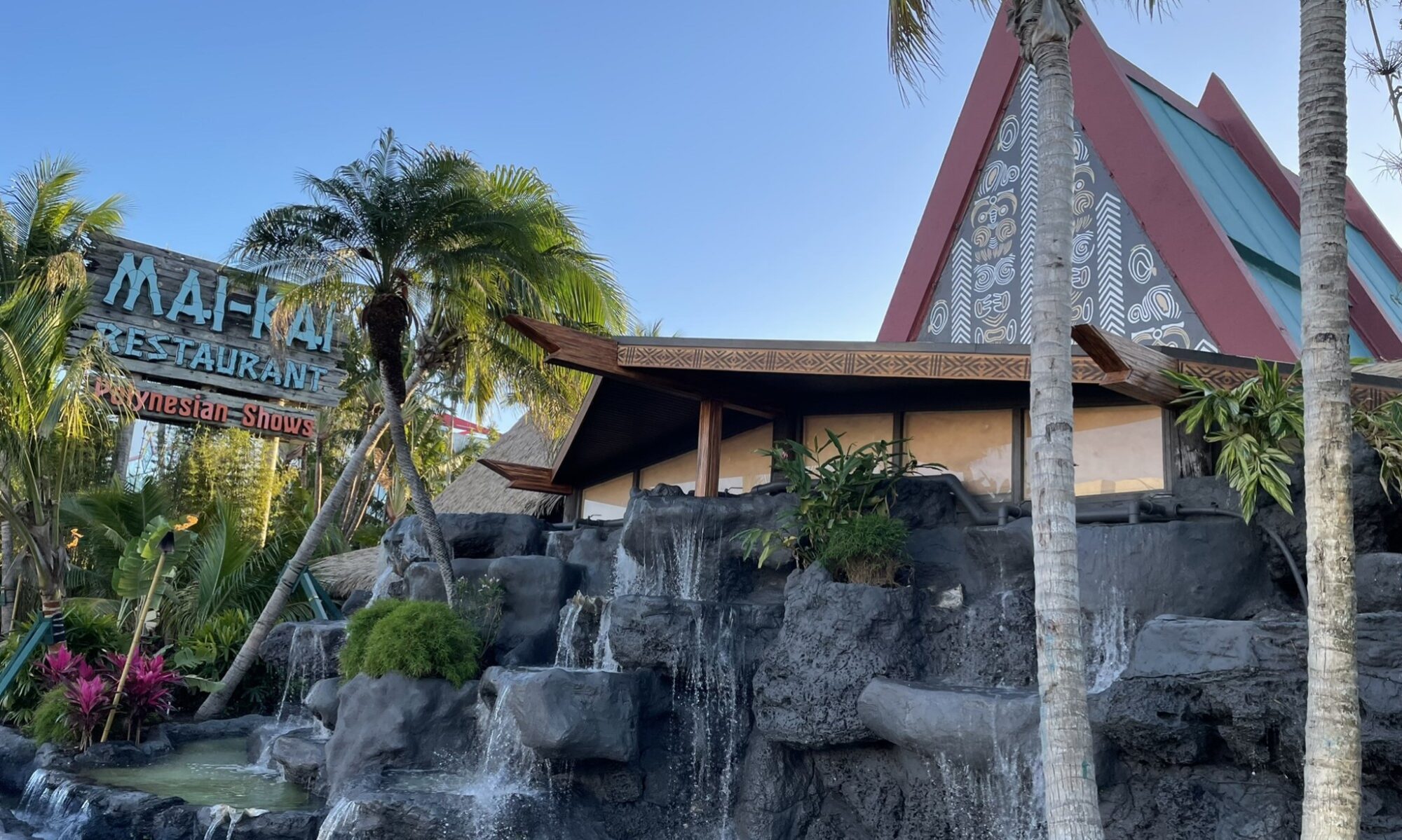
The Mai-Kai in Fort Lauderdale, now in its 56th year, is widely acclaimed as perhaps the last perfectly preserved mid-century Polynesian restaurant with its incredible vintage decor, acclaimed cocktails, authentic South Seas stage show, vast Asian-inspired menu and an ambience that makes you feel like you’ve been transported back in time.
One of the oldest Mai-Kai postcards, a rendering by architect Charles McKirahan. (From SwankPad.org)
But not many are aware of The Mai-Kai’s direct links to Tiki’s forefather, from the concept to the cocktails to the decor.
In 1933, a small tropical and nautical themed bar in Hollywood, Calif., called Don the Beachcomber was one of many thousands that opened the day after Prohibition ended. Who would have imagined that former rum-runner Ernest Raymond Beaumont-Gantt, who later changed his name to Donn Beach, had invented a new genre of mixology and a bar/restaurant concept that would be copied across the globe for decades to come.
Of course, we’re talking about the classic Tiki bar and its exotic tropical drinks. At the dawn of the cocktail era, Donn Beach was the undisputed king of tropical mixology. In an era of drinks with two or three ingredients, his secret recipes included up to a dozen, including two or three rums, resulting in drinks the world had never seen before.
Tiki bar pioneer Don the Beachcomber’s Test Pilot was one of the most copied drinks during the mid-century heyday of Polynesian cocktails. It morphed into the Ace Pilot, Space Pilot and Astronaut, among others. At The Mai-Kai, it became the Jet Pilot.
As discussed in the review of the vintage S.O.S. (Don the Beachcomber’s Three Dots and a Dash), Donn Beach was a decorated World War II veteran and always had a deep connection to the armed forces. In his honor, a B-26 Marauder was painted with a replica of the Don the Beachcomber driftwood sign on its nose. The plane and crew flew many successful missions in the Pacific.
The Test Pilot is also an interesting study in how Donn Beach constantly tweaked his drinks. A Don the Beachcomber cocktail from the 1930s or ’40s could be vastly different than one with the same name in the 1950s or ’60s.
The Jet Pilot features four rums, including Lemon Hart 151, and may be The Mai-Kai’s strongest of the strong. (Photo by Hurricane Hayward, January 2015)
Included below is a Test Pilot recipe unearthed by cocktail sleuth and author Jeff “Beachbum” Berry from the 1940s. It’s one of the most popular in the Tiki revival, and it features many of the same ingredients as The Mai-Kai’s Jet Pilot. We’ve also listed a later recipe from a book by Donn Beach’s widow, Phoebe. It’s slightly different but also very strong and has a similar flavor profile. Other popular old-school versions include the Jet Pilot served at Steve Crane’s The Luau chain in the 1950s (revealed by Beachbum Berry in Sippin’ Safari in 2007) and the Space Pilot, still served today at the Tiki Ti in Los Angeles (est. 1961).
In Minimalist Tiki by Cocktail Wonk blogger Matt Pietrek, a 2020 Spirited Award nominee for Best New Cocktail or Bartending Book, the Test Pilot and Jet Pilot are both listed among the “Classic 30” cocktails from the first golden era of tropical mixology.
Like Tiki Ti owner Ray Buhen, The Mai-Kai’s original mixologist, Mariano Licudine, worked for Donn Beach in the early days. In 1956, he was lured from the Don the Beachcomber restaurant in Chicago to design The Mai-Kai’s original tropical drink menu. So it’s likely he had a vast knowledge of multiple versions of the Test Pilot when he created arguably one of the best, The Mai-Kai’s high-octane Jet Pilot.
**************************
The official menu description
JET PILOT
Fast and courageous, a vigorous blend of heavy bodied rums and zesty juices.
Okole Maluna Society review and rating
Size: Medium
Jet Pilot (Photo by Hurricane Hayward, September, 2015)
Potency: Strong
Flavor profile: Dark and powerful rums, spicy and bitter notes with a hint of exotic sweetness.
Review: Very complex and intense. Not for the timid. Sweet, spicy and strong all at the same time.
Most classic Mai-Kai cocktails can be traced back to tropical drink pioneer Donn Beach (aka Don the Beachcomber), and the S.O.S. is no exception. Most are easy to spot due to the similar names (Cobra’s Fang = Cobra’s Kiss, Pearl Diver = Deep-Sea Diver). But others are a little harder to trace.
From a 1950s Don the Beachcomber menu.
The clue to the origins of S.O.S. is actually the garnish: the distinctive three speared cherries. In reviewing old Don the Beachcomber menus, it’s hard to miss the classic Three Dots and a Dash, a tribute to Americans fighting overseas. “Three dots and a dash” was Morse code for “victory” during World War II, when Donn Beach created the drink. Beach served in the Army Air Corps and was awarded the Purple Heart and Bronze Star.
Thanks to tropical drink historian Jeff “Beachbum” Berry and his 2007 book, Sippin’ Safari, we also have the recipe to compare. Mai-Kai mixologist Mariano Licudine, who knew Donn Beach’s recipes well from his days slinging drinks at Don the Beachcomber in Los Angeles and Chicago, simply changed the name to S.O.S. and tweaked the complex recipe to make it a bit more user friendly.
The result is a highly recommended cocktail from the mild side of The Mai-Kai’s menu, full of nuances yet still not too overpowering. Be sure to pick up the expanded and updated 10th anniversary edition of Beachbum Berry’s Sippin’ Safari, featuring many new and historic recipes, a new hardcover design with additional photos, plus forward and afterward that chronicle the years leading up to the Tiki revival plus the influence the book has had over the past decade.
July 2018 update: The S.O.S. was one of three cocktails featured at The Hukilau in Fort Lauderdale in June in Hurricane Hayward’s Okole Maluna Cocktail Academy class, “How to Mix Like The Mai-Kai.” In the sold-out event, students learned tips and techniques for turning their home bars into a Tiki cocktail paradise by exploring the key elements of Mai-Kai cocktails. (Atomic Grog photos from The Hukilau’s Okole Maluna Cocktail Academy at the Pier Sixty-Six Hotel & Marina on June 8, 2018)
After explaining the importance of fresh Florida juices, Hayward demonstrated how to make the S.O.S. tribute recipe while the class received sample drinks. The juices and syrups, along with a simplified rum profile, give the S.O.S. an altogether different flavor than Three Dots and a Dash, the students learned. The juices take a more prominent role, and the S.O.S. is a great spotlight for the fresh Florida orange juice used in many Mai-Kai drinks. See photos from the class:Facebook | Flickr