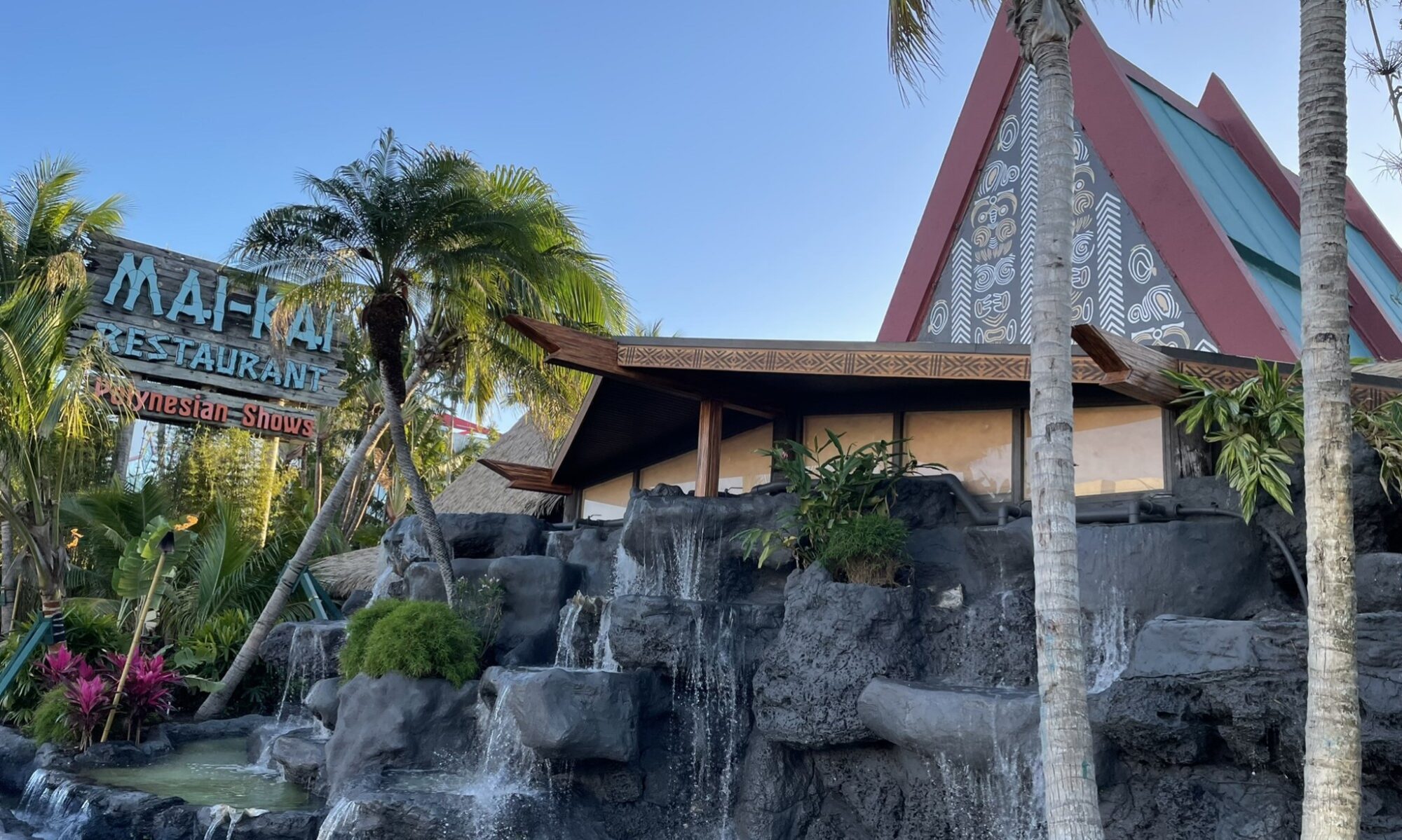
The 2012 Hukilau will be held April 19-22 at The Mai-Kai and several Fort Lauderdale beachside hotels. Official sites: TheHukilau.com | Facebook page | Facebook group
The annual Tiki weekender known as The Hukilau is famous for giving participants unprecedented hands-on access to the best bands, artists and cocktail experts in the modern Polynesian Pop movement. It’s a laid-back affair where friends old and new enjoy live music, mingle at special themed parties and show off their devotion to the world of retro culture.
At no time was this on display better than at the opening night party in 2010, when hundreds of revelers were treated to an ultimate trip into the world of Tiki culture. The Bahia Cabana Beach Resort in Fort Lauderdale played host to a whirlwind evening of live music, room parties and cocktail contests.
With this month’s 11th annual Hukilau fast approaching, let’s take a look back at that night of revelry with another special audio slideshow. Click here or on the images above and below to relive all the hijinks. Then click on the play button and be sure to turn up your speakers!
Prior to the opening of The Mai-Kai in 1956, there were perhaps other icy cocktails that employed dark rum and coffee as key ingredients. But none perfected it quite like the Black Magic.
From a 1963 Mai-Kai calendar. (Courtesy of TheSwankPad.org)
The drink that has spawned dozens of imitators – and even two similar concoctions at The Mai-Kai – has taken on legendary status in the Tiki cocktail community. The Black Magic is the oldest of what some call the “Holy Trinity” of large snifter drinks at The Mai-Kai: The Black Magic, Mutiny and The Hukilau.
One of the keys to this drink is a distinctive dark rum favored by original Mai-Kai mixologist Mariano Licudine: Dagger was a dark Jamaican brand that stopped production some time ago. It became somewhat of a holy grail of Tiki mixologists looking to duplicate the key flavor in many Mai-Kai cocktails, especially the Black Magic.
Kohala Bay dark Jamaican rum was a key ingredient in many Mai-Kai cocktails. (Photo by Hurricane Hayward, March 2012)
Needless to say, we immediately went on an intensive search, but short of taking a trip to Jamaica it was nearly impossible to locate. We were told it was being imported only to Florida, and The Mai-Kai was one of only two bars to serve it. After some digging, however, we miraculously found a rare retail outlet that carried Kohala Bay and immediately stocked up. Our discovery of Kohala Bay sparked many other tribute recipes that you’ll find in this guide, and also spurred many other home mixologists to seek out the rum. Click here for more on the history of Kohala Bay at The Mai-Kai.
But all good things must come to an end. Kohala Bay was taken off the market in April 2016 and has not returned. While still seeking out an appropriate dark and funky run to fill the bill, The Mai-Kai switched to one of the Appleton Estate rums as its dark Jamaican mixer. Then, suddenly, a new rum appeared in April 2019. It’s a secret in-house multi-rum blend, similar to one of those we had been touting here on the blog. Click here for an in-depth guide along with all the suggested Kohala Bay substitutes.
The Black Magic is served in The Molokai bar in October 2016. It’s not really raining. That’s The Mai-Kai’s special windows that simulate a calming tropical downpour. (Photo by Hurricane Hayward)
The name Black Magic comes from the combination of dark rums and coffee, which sets this drink apart from most others from its era. It was reportedly created by Licudine while he was still working for Donn Beach as the No. 2 bartender at the Don the Beachcomber restaurant in Chicago. But even Beach’s top men were not given the opportunity to contribute their own creations to his legendary drink menu.
Lured to Fort Lauderdale to run The Mai-Kai’s bar and create what would decades later become an iconic menu in its own right, Licudine borrowed heavily from Beach’s classics but also added his own flair (Mara-Amu, Derby Daiquiri, etc.). The Black Magic may be his crowning achievement, and it was his first creation to appear on a Mai-Kai menu.
While it’s not nearly as complex, an early Don the Beachcomber cocktail from the 1930s called the Jamoca could possibly have influenced Licudine, since he worked at Don the Beachcomber in Los Angeles at the tail end of that decade. As revealed by Tiki cocktail historian Jeff “Beachbum” Berry in his 2007 book, Sippin’ Safari, the Jamoca contains 1/2 ounce fresh lime juice, 1/2 ounce coffee syrup, 1 ounce chilled coffee, 1 ounce gold Puerto Rican rum, 1 ounce gold Jamaican rum, and 4 ounces of crushed ice. Blended at high speed for 5 seconds and poured into a specialty glass, it’s a coffee-heavy drink that hits few of the high notes later achieved by Licudine with the Black Magic. Berry theorized that it may have been an early Donn Beach experiment inspired by turn-of-the-century soda fountain fare. It’s historically worth noting, but probably not a true ancestor of the Black Magic. We consider this classic to be a true Mariano Licudine original.
The 2012 Hukilau will be held April 19-22 at The Mai-Kai and several Fort Lauderdale beachside hotels. Official sites: TheHukilau.com | Facebook page | Facebook group
The Hukilau is an all-encompassing celebration of Polynesian Pop culture: Art and architecture, food and drinks, music and fashion. It’s a trip back in time with hundreds of like-minded Tiki disciples to an era when kitsch was king. The entire event is an orgiastic fest of the senses – from the outrageous lowbrow art and Tiki carvings to the exotic music to the decadent drinks and food. Fort Lauderdale’s beachside locale and historic Mai-Kai restaurant are the perfect backdrop for the revelry.
To warm up for this month’s 11th annual Hukilau, let’s take a trip back to 2009, when lucha-masked surf and rockabilly band Los Straitjackets headlined the event. Click here or on the image below to see a special audio slideshow of all the festivities. Be sure to turn up your speakers! Below that is a recap of the schedule for reference. This year’s event promises the same experience, plus much more. Eddie Angel of Los Straitjackets is back with his new band, The Martian Denny Orchestra. We hope to see you there!
Not to be confused with the deadly 151 Swizzle, the Mai-Kai Swizzle is a sweet and fruity mild drink that nevertheless rises above the mundane with a unique combination of juices and syrups plus a healthy dose of gold Jamaican rum.
Authentic swizzle sticks come from trees native to the Caribbean. (Photo by Hurricane Hayward, March 2012)
It also sheds some light on a unique technique called swizzling. Many drinks with swizzle in their name are simply shaken or blended (as The Mai-Kai likely does), but a traditional swizzle follows a tried-and-true method that originated in the Caribbean.
Most mixologists today will use a quality bar spoon to swizzle a drink. Simply put: Fill a glass or shaker with your cocktail ingredients and crushed ice, insert the spoon and quickly spin the handle back and forth between the palms of both hands. This will quickly mix/blend the drink, and if you’re doing it correctly the glass or shaker will quickly become cold and frosty, and your cocktail will be ready to drink.
The highlight of the fourth annual Miami Rum Renaissance Festival certainly promises to be the two-day Grand Tasting events on Saturday and Sunday, April 21-22, when the Deauville Beach Resort in Miami Beach hosts thousands of enthusiasts and industry VIPs for two full days of sampling the best cane spirits from around the world.
But in addition to those festivities, a wide range of events and activities are scheduled under the banner of Miami Rum Week starting Monday, April 16. Among the highlights:
Beachbum Berry explains how to quickly pulse blend an original Zombie at the 2011 Miami Rum Renaissance Festival at The Mai-Kai. (Photo by Hurricane Hayward)
In the latter years of the 20th century, there were two eras: B.B.B. and A.B.B. Before Beachbum Berry, it was the dark days, when tropical drink mixology was still mired in the depths of decades of misunderstanding and neglect. But After Beachbum Berry, that all changed.
A screenwriter and director formerly known as Jeff Berry took his obsession with finding the most authentic and painstakingly-crafted exotic cocktails of the early and mid-20th century to the masses. His five books – from Grog Log in 1998 through Beachbum Berry Remixed in 2009 – have redefined how we view Tiki drinks.
Sure, mixology probably still would have enjoyed its current and ongoing renaissance without him, but it would surely be a lot less colorful and fun place. But beyond the campy humor and aloha shirts, Berry takes his craft and research seriously. He spent 10 years tracking down the authentic recipe for the Zombie, perhaps the most elusive cocktail of its time.
You can view, and taste, the results of his research in a special symposium at the 11th annual Hukilau in Fort Lauderdale on Saturday, April 21. “Revenge Of The Zombie: The Tale of Tiki’s Deadliest Drink” will explore the development of one of history’s most infamous cocktails, from the 1930s to the present.
Not only is Dick Dale considered “King of the Surf Guitar” and one of the most influential musicians to ever pick up the instrument, he’s also a living testament to perseverance in the face of adversity.
The 74-year-old legend has carved out a long and storied career on his own terms, never bowing to the whims of the music industry. This might be the only reason the Rock ‘n’ Roll Hall of Fame has not yet come knocking. But Dale has not only fought for his independence, he’s fought for his life. And won.
Fending off cancer more than once, Dale gives us many reasons to admire his relentless tenacity. And to pay homage when he comes to South Florida next month for two area concerts: Saturday, April 21, at Respectable Street in West Palm Beach; and Sunday, April 22, at Churchill’s Pub in Miami. [See all the show info below]
Consider the obstacles Dale has had to overcome in his more than 50-year career:
Many folks skip right over The Mai-Kai’s “mild” cocktails, heading straight for the medium-strength classics and high-octane strong drinks on the voluminous menu. But that would be a mistake.
There are many tasty cocktails on the less-intense side of the menu, including the Samoan Grog, one of the top picks among all the “mild” drinks. In the case of this and several others, “mild” is a misnomer.
Sure, it contains less alcohol than some of its stronger brethren, but the Samoan Grog packs quite a punch with its complex, exotic flavor profile. And like more than half the drinks on the menu, it’s a descendant of a Don the Beachcomber classic, the Colonial Grog (see ancestor recipe below).
Original Mai-Kai mixologist Mariano Licudine had a knack for turning old-school Don the Beachcomber cocktails from the 1930s and ’40s into sweeter, more accessible Mai-Kai staples. Sometimes, like in this example, all it took was a few simple tweaks.
This cocktail is also an example of how research into the link between Don the Beachcomber and The Mai-Kai can sometimes take a few twists and turns. It was originally thought that the Samoan Grog was a descendant of Don’s Own Grog, a similar drink that appeared in Beachbum Berry’s Sippin’ Safari in 2007. That drink dated back to to the 1930s, when Licudine worked at the flagship Don the Beachcomber location in Hollywood. So I was fairly certain that this had to be the inspiration for The Mai-Kai’s mild drink, which has been on the menu since opening day in 1956.
And right there in the middle of Chapter 5 is a full page dedicated to the Colonial Grog, which bears a striking resemblance to the Samoan Grog. Not surprisingly, this circa 1944 (previously unpublished) recipe comes from the private papers of Mariano Licudine, who worked at Don the Beachcomber from 1939 to 1956. You’ll find the recipe below, along with instructions on how to make its unique ice shell.
The Samoan Grog may not get the attention of its stronger cohorts on The Mai-Kai menu, but it’s a classic example of cocktail history in a glass.
With the U.S. East Coast’s largest celebration of Polynesian Pop culture quickly approaching, more details have been released about the April 19-22 event in Fort Lauderdale. Centered at the legendary Mai-Kai restaurant and two beachside hotels, the 11th annual Hukilau is shaping up to be a tikiphile’s paradise.
The latest news from Hukilau headquarters:
Hukilau 2012 commemorative mug by Tiki Diablo.
2012 COMMEMORATIVE MUG
Designed by Danny Gallardo, aka Tiki Diablo, this limited-edition drinking vessel was inspired by Milan Guanko, Hukilau organizer Tiki Kiliki’s favorite historic carver. When Gallardo sent her a photo of a Tiki from carver Richard Ellis that was made for the Tradewinds Restaurant in Oxnard, Calif., she immediately knew it was what she wanted: “This Tiki had everything we wanted and more. Danny has done an amazing job – we love it!”
While room parties will surely be ongoing throughout the weekend, the officially sanctioned cocktails will be centered around the pool and sun deck at the Best Western Oceanside Inn.
Surfing Florida: A Photographic History – Traveling exhibition and book project at Florida Atlantic University’s Schmidt Center Gallery runs from March 17 through May 12. Opening reception Friday, March 16.
* Official FAU galleries site | Exhibit Facebook page | March 16 Facebook event
When one thinks of the history of surfing, Florida – with its lack of monster waves and international acclaim that made Southern California and Hawaii famous – often takes a back seat. But the Sunshine State has its own rich surf history and culture, which will be getting its due respect this spring at Florida Atlantic University in Boca Raton.
Artwork by Liam Milano (courtesy of PureHoney)
Surfing Florida: A Photographic History presents the history of Florida surfing through contributions from more than 50 photographers and 100 surfers. The comprehensive exhibit kicks off Friday with an opening reception featuring live music by Guy Harvey and Cutback. Housed at the university’s Schmidt Center Gallery, it will run through May 12 and include other special events, such as film screenings and lectures by “surf scholars.”
Starting March 22 and continuing for 10 weeks, there will be a screening of a surf film every Thursday in the lecture hall next to the gallery. The first film will be Evolution, the classic 1969 movie by New Zealand director Paul Witzig. On March 29, the 1972 film Morning of the Earth will be shown. Featuring stunning surfing sequences from Bali, Angourie, Kirra, Oahu, Maui and elsewhere, it’s considered by some the greatest surfing film ever made.
With Dick Dale coming to town in April, it’s shaping up to be a surf-happy spring. Tickets to Dale’s West Palm Beach and Miami concerts April 21-22 will be given away at the film screenings.